Voters Weigh In: Is Health Care Fraud a Top Priority for the Midterms?
New KFF data reveals how voters prioritize health care costs versus government fraud crackdowns ahead of the upcoming midterm elections.
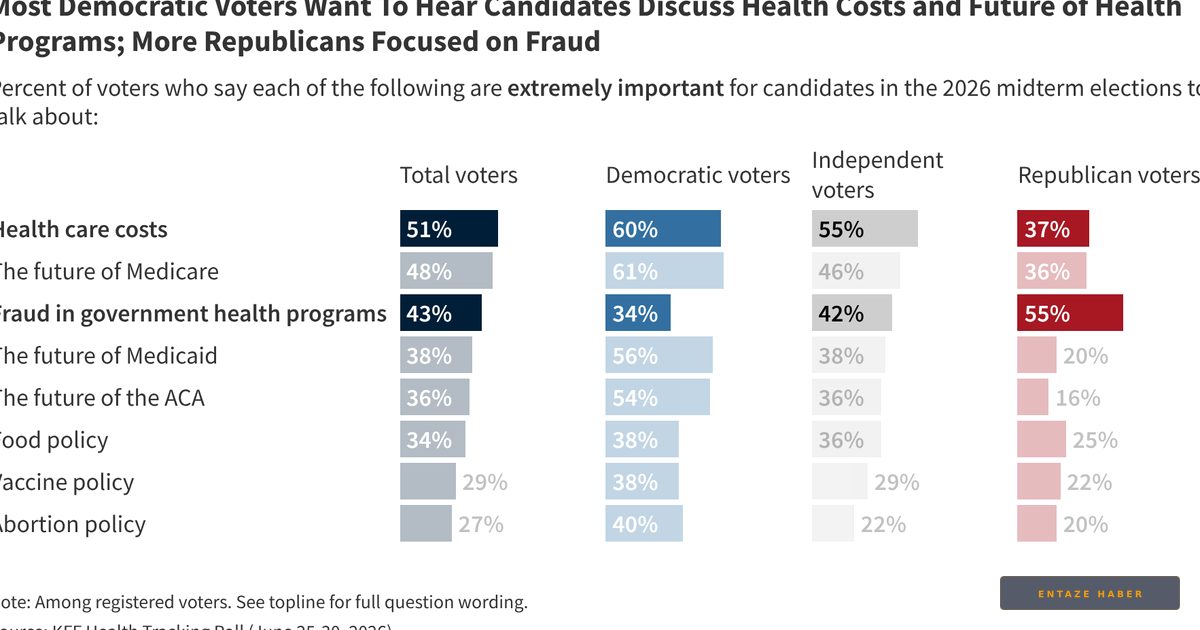
Economic Anxiety and Health Care Costs
As the 2026 midterms approach, financial pressures related to medical care remain the primary economic concern for the American public. A significant portion of the electorate—roughly six in ten adults—expresses worry about their ability to afford insurance premiums, prescription drugs, and routine office visits. While concerns regarding gas prices have fluctuated due to shifts in the global landscape, health care costs consistently occupy the top spot on the list of household economic anxieties.

Partisan Perspectives on Fraud and Policy
Political leanings significantly influence how voters view government programs. While Democrats and independents highlight the future of Medicare and the Affordable Care Act as critical campaign topics, Republicans are uniquely focused on fraud. Over half of Republican voters (55%) state that addressing fraud in government health systems is an extremely important issue for candidates to address. This sentiment aligns with recent Trump administration initiatives, including a March 2026 Executive Order establishing a dedicated task force chaired by Vice President J.D. Vance to combat systemic abuse.

Perceptions of Waste and Accountability
Despite the focus on fraud, voters generally view health care as less prone to systemic corruption than other sectors. While 40% of voters see significant fraud in Medicaid and 36% in Medicare, higher percentages identify rampant abuse in the federal tax system, military contracts, and foreign aid. Furthermore, a clear majority of the public attributes potential fraud to large institutions and health care providers rather than individual patients. Although the administration has begun freezing certain Medicaid payments to states to curb waste, a majority of voters (65%) suspect these moves are driven by political motives rather than genuine fiscal concern.
Prioritizing Patient Access
When faced with a choice between strict fraud enforcement and ensuring patient access to care, the public leans toward protection. Roughly 71% of voters argue that securing care for Medicaid beneficiaries should take precedence over fraud prevention efforts. While Republican voters are more divided on this trade-off, the overall consensus suggests that the electorate remains wary of policies that might disrupt medical services for vulnerable populations, even when touted as cost-saving measures.
Recent Developments
Breaking news surrounding the 2026 election cycle highlights how health policy shapes voter sentiment. Latest updates indicate that candidates are adjusting their platforms to address these shifting priorities in live news coverage. You can follow all developments instantly on MedicareTicker.com.
Related Topics
🔹 Health Care Policy 🔹 Medicare Fraud 🔹 Medicaid Reform 🔹 2026 Midterm Elections 🔹 Voter Sentiment 🔹 Government Spending 🔹 KFF Health Tracking
State-news News
This category provides comprehensive coverage of policy shifts and legislative updates affecting state-level health programs. We track breaking news and provide the latest updates on how federal decisions impact local healthcare, ensuring our readers stay informed with live reporting on MedicareTicker.com.
Frequently Asked Questions
Do voters think fraud in health care is widespread?
While many acknowledge that some fraud exists, voters believe it is less pervasive in Medicare and Medicaid than in other federal sectors like the tax system or military contracts.
Who do voters believe is responsible for health care fraud?
Most voters identify health care providers and institutional systems as the primary perpetrators of fraud, rather than the individual patients receiving care.
Are voters supportive of federal Medicaid payment freezes?
Most voters are skeptical of these freezes, with 65% believing the actions are politically motivated and concerned that they may limit access to necessary care for low-income populations.