U.S. Substance Use and Suicide Mortality Ranks as Third Leading Cause of Death
Data reveals substance use and suicide are now the third leading cause of death in the U.S. Explore the latest trends, demographic impacts, and policy challenges.
A Growing Public Health Crisis
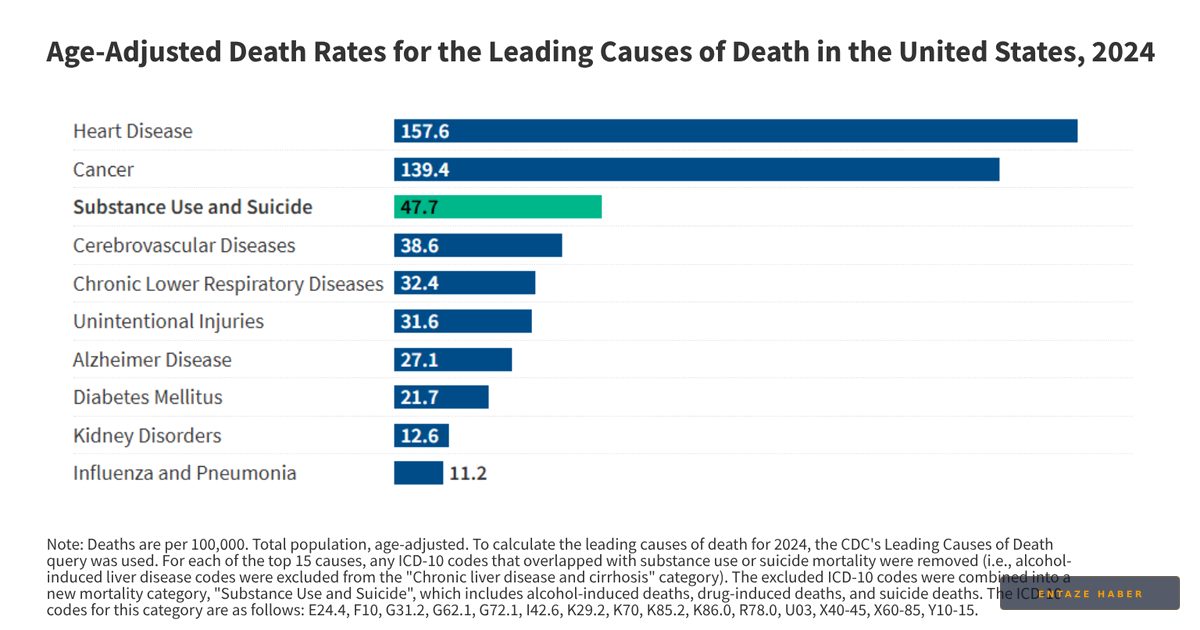
Recent data highlights a sobering reality: substance use and suicide have emerged as the third leading cause of death across the United States. In 2024 alone, 170,449 individuals lost their lives to these factors, resulting in an age-adjusted death rate of 47.7 per 100,000 people. This figure places these causes of death behind only heart disease and cancer, emphasizing the urgent need for systemic intervention.

Decade-Long Mortality Trends
Over the last ten years, the national landscape regarding these deaths has shifted significantly. From 2014 to 2024, the combined mortality rate climbed by nearly 40%, rising from 34.6 to 47.7 per 100,000 population. While rates held relatively steady following a 2017 peak, the onset of the pandemic triggered a sharp surge, reaching 59.6 deaths per 100,000 in 2021. Experts point to the worsening opioid crisis and the influx of fentanyl into the illicit drug supply as primary drivers of this pandemic-era spike. Although recent numbers have receded from that 2021 peak, they remain stubbornly higher than pre-pandemic levels.

Demographic Impact and Disparities
Mortality data reveals that specific groups face a disproportionate burden. Adults between the ages of 45 and 64 represent the highest mortality rate at 85.3 per 100,000. Furthermore, the divide between genders remains stark; men experience death rates nearly three times higher than women, with the gap between the two groups widening over the past decade. Racial and ethnic disparities are also shifting. While American Indian and Alaska Native populations continue to face the highest overall mortality rates, the rate of increase among Black and Hispanic communities has outpaced that of their White peers, narrowing the historical divide in these tragic statistics.
Barriers to Essential Care
Despite the clear prevalence of these issues, access to mental health and addiction services remains a critical hurdle. Many insured individuals report difficulty navigating narrow provider networks and logistical obstacles. Surveys indicate that 43% of people struggling with poor mental health were unable to secure necessary treatment or medication last year. Policy shifts, including changes to the enforcement of the Mental Health Parity and Addiction Equity Act and legislative impacts on Medicaid and ACA coverage, threaten to further disrupt the continuity of care for vulnerable populations.
Recent Developments
Public health officials are closely monitoring these trends as breaking news regarding healthcare access continues to emerge. These latest updates highlight the ongoing struggle to provide equitable mental health support across the country. You can follow all developments instantly on MedicareTicker.com.
Related Topics
🔹 Mental Health Policy 🔹 Substance Abuse Treatment 🔹 Public Health Statistics 🔹 Suicide Prevention 🔹 Healthcare Access 🔹 Opioid Crisis 🔹 Medicaid Coverage
State-news News
This category provides breaking news and the latest updates on regional and national health policy shifts. We keep the public informed through live reporting on issues that impact individual access to care and federal healthcare mandates via MedicareTicker.com.
Frequently Asked Questions
Why are substance use and suicide deaths grouped together in this data?
These causes are examined as a composite measure because they often share upstream risk factors, such as economic strain and mental health struggles, which require similar prevention strategies.
How has the opioid crisis influenced recent mortality rates?
The introduction and widespread presence of fentanyl in the drug supply are widely considered to be primary contributors to the sharp spike in overdose deaths observed during the pandemic years.
What barriers prevent people from receiving mental health treatment?
Many individuals face significant hurdles, including narrow insurance provider networks, high out-of-pocket costs, and limited availability of specialized mental health professionals.