The Hidden AI War: How Hospitals and Insurers Are Battling Over Your Health Care Dollars
Discover the hidden AI arms race in healthcare administration as experts debate if new technology will cut costs or just intensify billing disputes.
A Silent Digital Conflict in Health Administration
A quiet but intense technological struggle is reshaping the American healthcare landscape. As artificial intelligence integrates into the back offices of medical systems, a tactical arms race has emerged between healthcare providers and insurance companies. On one side, medical providers are deploying sophisticated AI tools to streamline coding, billing, and revenue capture. Conversely, insurers are countering with their own AI-driven systems designed to audit, review, and frequently deny claims to maintain fiscal boundaries.

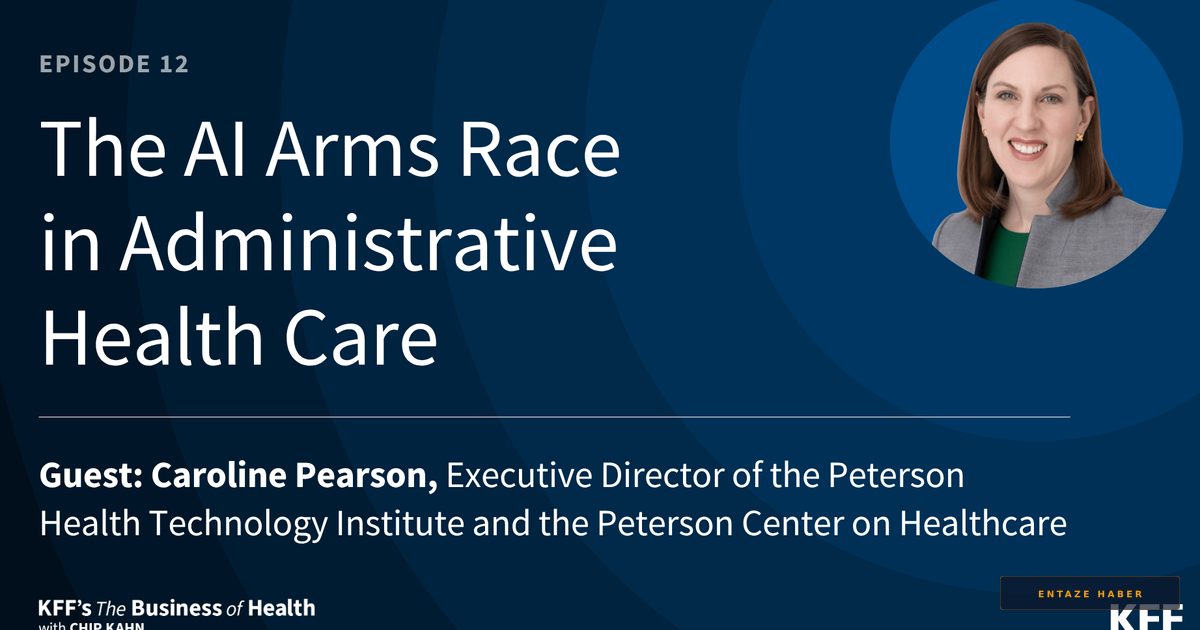
Caroline Pearson, the Executive Director of the Peterson Health Technology Institute (PHTI) and the Peterson Center on Healthcare, recently joined host Chip Kahn on "The Business of Health" podcast to shed light on this escalating situation. The central concern remains whether these technological advancements will genuinely reduce national healthcare spending or merely accelerate the adversarial nature of billing disputes.
Challenging the Promise of Efficiency

Pearson brings a unique, evidence-based perspective to the conversation. Her organization, PHTI, conducts rigorous, independent assessments of health technology. A prime example of their work includes a high-profile investigation into digital diabetes tools, which revealed that such technology did not necessarily lower the total cost of care. Her team is currently applying similar scrutiny to the administrative AI tools used in prior authorization and medical billing.
During the discussion, Pearson and Kahn explored the fundamental question: can AI deliver tangible improvements in patient care and cost savings, or does it simply create more administrative noise? The answer, according to Pearson, depends heavily on how current policy and existing financial incentives steer the adoption of these technologies. If the primary goal of AI implementation is merely to maximize revenue or minimize payouts, the patient may lose out on the potential benefits of a more efficient system.
Policy and the Future of Care
Charles N. Kahn III, a senior visiting fellow at KFF, emphasizes the importance of connecting business practices, policy, and the patient experience. As an elected member of the National Academy of Social Insurance and a recognized leader in the field, Pearson brings substantial expertise to this dialogue. Her background includes high-level roles at NORC at the University of Chicago and Avalere Health, along with a degree from Harvard University.
As the industry continues to integrate these powerful tools, the Peterson-KFF Health System Tracker remains a vital resource for monitoring the quality and cost-effectiveness of the U.S. healthcare system. Whether AI serves as a tool for progress or a weapon in an administrative war will depend on the regulatory frameworks established in the coming years.
Recent Developments
The integration of artificial intelligence into medical billing and prior authorization is currently a major focus of breaking news in the healthcare sector. Experts are providing the latest updates on how these algorithmic tools affect both providers and patients, while live news coverage continues to track the impact of these digital changes on total system costs. You can follow all developments instantly on MedicareTicker.com.
Related Topics
🔹 Artificial Intelligence in Healthcare 🔹 Medical Billing Reform 🔹 Prior Authorization 🔹 Healthcare Technology Evaluation 🔹 Health Insurance Claims 🔹 Administrative Cost Reduction 🔹 Digital Health Policy
State-news News
This category covers the latest updates regarding healthcare policy and administrative shifts across the United States. We provide breaking news and live analysis to keep our readers informed about how national trends impact local health systems. You can find all the latest reports on MedicareTicker.com.
Frequently Asked Questions
What is the primary conflict between providers and insurers regarding AI?
Providers are using AI to optimize billing and revenue capture, while insurers are using it to automate claim reviews and denials. This creates a cycle where both sides use technology to gain a financial advantage over the other.
Can AI actually lower healthcare costs for patients?
While AI has the potential to reduce administrative waste, current evidence suggests it may lead to more activity and friction rather than real savings. The outcome depends on whether policy incentives are aligned to reward better patient outcomes instead of just speed.
What role does the Peterson Health Technology Institute play in this trend?
PHTI conducts independent, rigorous evaluations of digital health tools to determine if they actually improve care or lower costs. Their work helps policymakers and health systems distinguish between effective technology and over-hyped software.