Health Insurance Rebates Set to Shrink in 2026: What Consumers Need to Know
Health insurers estimate $759 million in 2026 MLR rebates. Learn how these ACA-mandated payments affect your premiums and coverage.
2026 Rebate Projections
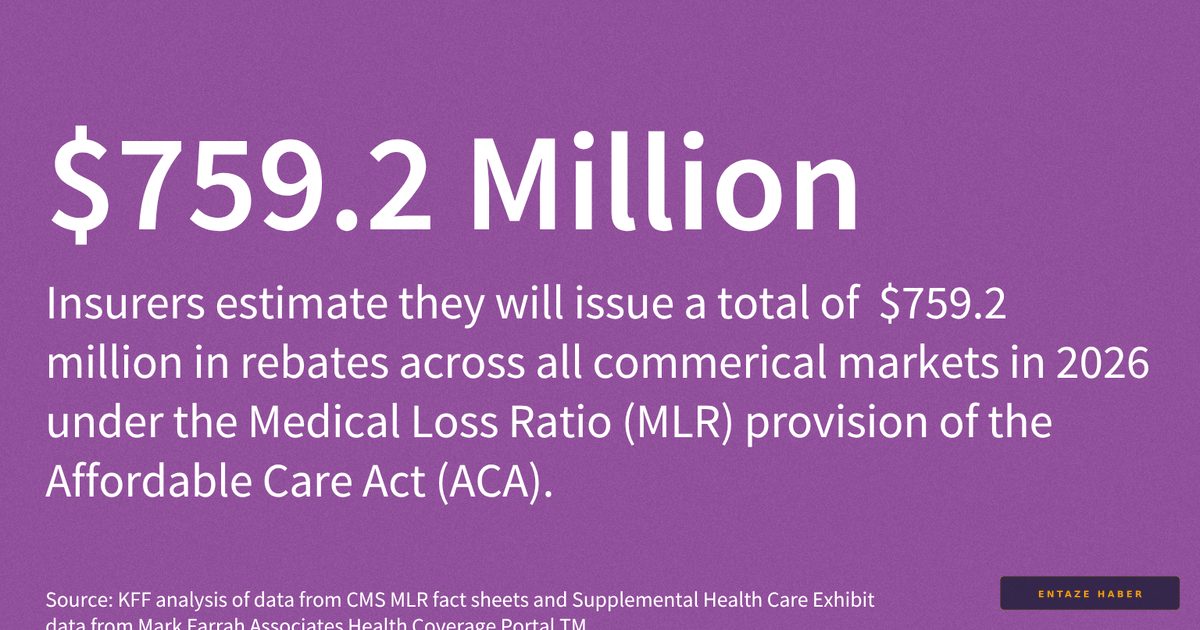
Health insurance companies are currently projecting a total of $759 million in Medical Loss Ratio (MLR) rebates for 2026. This figure, derived from preliminary reports filed with state regulators, marks a significant decline from the $1.6 billion distributed in 2025 and the $958 million issued in 2024. Since the Affordable Care Act (ACA) introduced the rebate mandate in 2012, the industry has returned approximately $14.4 billion to policyholders, a sum expected to reach $15.1 billion by the end of this year.

Understanding the ACA Rebate Mandate
The ACA established the MLR provision to ensure that the majority of premium dollars go directly toward patient care rather than administrative overhead or corporate profit. For individual and small group plans, insurers must spend at least 80% of their premium income on health claims and quality improvement. Large group insurers face a stricter requirement, with an 85% threshold. When companies fail to meet these targets, they are legally required to refund the difference to individuals and businesses. These calculations rely on a three-year rolling average, meaning the 2026 payments reflect financial performance from 2023, 2024, and 2025.

Why Rebate Totals Are Declining
The current estimate of $759 million is a far cry from the record-breaking $2.5 billion returned in 2020 and $2.1 billion in 2021. Those peak years were anomalies, fueled by high margins from previous years and an unexpected drop in medical utilization during the COVID-19 pandemic. As claims costs have caught up to premium levels, insurer margins have compressed, leading to a period of financial normalization rather than excessive profitability.
Market Loss Ratios and Future Premiums
Simple loss ratios—which track how much of a premium dollar is spent on care—reached 93% in the individual market during 2025, indicating tighter margins for insurers. However, because rebates are based on a three-year average, some companies may still owe money despite recent performance. Looking ahead, the 2026 landscape remains volatile. With ACA Marketplace premiums seeing their sharpest increase since 2018, the industry is closely watching whether current pricing will outpace actual claims, potentially setting the stage for future rebate requirements.
Logistics of Receiving Payments
Consumers should expect official notifications by late September. For individual policyholders, rebates typically arrive as checks or premium credits. In employer-sponsored plans, the distribution depends on how the company and employee share premium costs. Notably, insurers are not required to issue payments if the amount falls below $5 for individuals or $20 for groups, as the administrative costs would outweigh the benefit.
Recent Developments
We are covering the latest updates on ACA insurance mandates as part of our breaking news series. These live news reports track how shifting market dynamics impact your wallet and health coverage. You can follow all developments instantly on MedicareTicker.com.
Related Topics
🔹 Health Insurance Reform 🔹 Affordable Care Act 🔹 Insurance Premiums 🔹 Healthcare Economics 🔹 Consumer Protection 🔹 Market Loss Ratios 🔹 Employer Benefits
State-news News
This category provides breaking news regarding regional and national health insurance policy shifts. We deliver the latest updates on administrative requirements to ensure our readers stay informed through our live coverage at MedicareTicker.com.
Frequently Asked Questions
What determines if I receive a rebate?
Insurers must return money if they spend less than the required 80% or 85% of premiums on medical care. Rebates are calculated based on a three-year rolling average of financial performance.
When will 2026 rebates be distributed?
Insurers are expected to mail out rebate notices or payments by the end of September 2026. The federal government will publish a summary of state-by-state totals later that year.
Do self-funded employer plans qualify for these rebates?
No, the MLR requirement only applies to fully-insured plans. Approximately two-thirds of workers covered by employer-sponsored insurance are enrolled in self-funded plans, which are exempt from this specific ACA rule.