Four Years of 988: Surging Demand Meets Financial Uncertainty in U.S. Crisis Care
As the 988 Suicide & Crisis Lifeline enters its fourth year, demand is at an all-time high. Explore the challenges of funding and staffing this vital resource.
A Milestone for National Crisis Response
Since its nationwide rollout on July 16, 2022, the 988 Suicide & Crisis Lifeline has evolved into a critical pillar of the American mental health infrastructure. Providing free, 24/7 access to counseling via voice, text, and chat, the service currently connects individuals in distress to a network of over 200 local and state-funded centers. This initiative emerged during a period of escalating public health concerns; between 2014 and 2024, the nation recorded over 516,790 suicide deaths, with firearms involved in more than half of these tragedies. By 2024, suicide and substance-related fatalities ranked as the third leading cause of death in the United States, trailing only heart disease and cancer.

Explosive Growth in Contact Volume
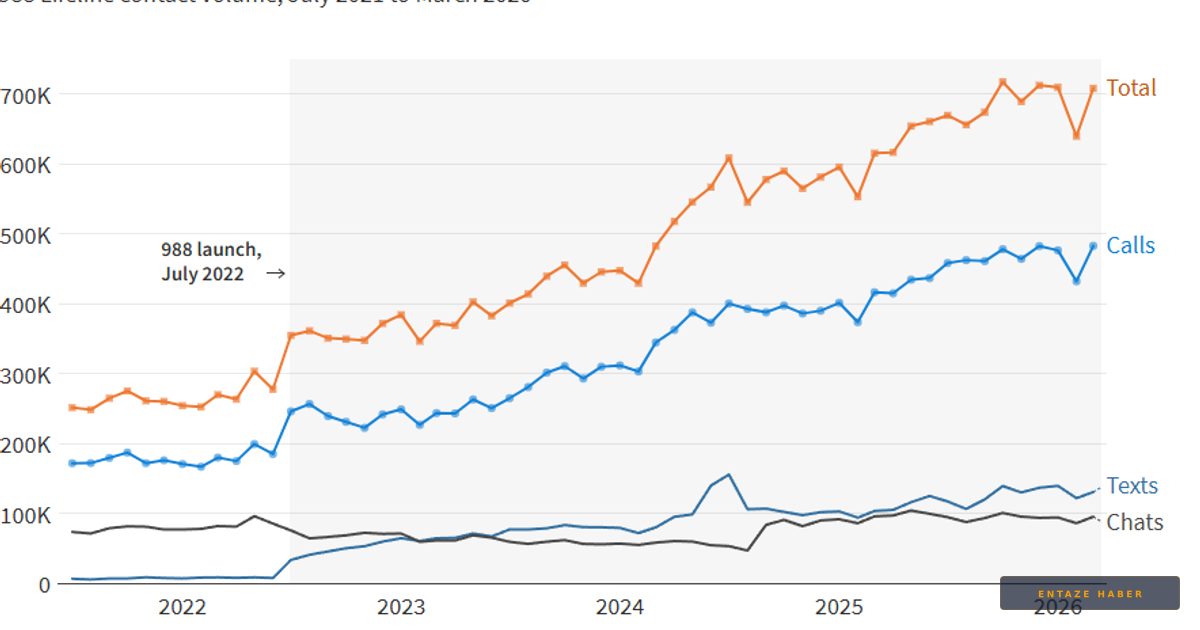
Data through March 2026 reveals a significant surge in public utilization. Total contacts—encompassing calls, texts, and chats—have climbed to 23.3 million since inception. Monthly volume consistently exceeds 600,000, often pushing past 700,000 per month as of early 2026. This represents a massive increase compared to the 277,407 contacts recorded in June 2022, just before the three-digit code became the national standard. While increased public awareness drives much of this traffic, the system also faces operational hurdles, including the 2025 termination of a dedicated LGBTQ+ service for youth, which previously accounted for 10% of total volume.

The Shift Toward Localized Support
States are successfully routing a higher percentage of calls to local centers, where counselors possess a deeper understanding of community-specific resources. As of May 2026, 26 states successfully answered at least 90% of calls within their own borders, a notable improvement from the eight states that achieved this benchmark at the program's launch. Despite this progress, staffing shortages remain a persistent barrier. A 2025 assessment of call center leadership found that approximately 75% of facilities are struggling with personnel gaps, with nearly 90% noting extreme difficulty in securing resources for recruitment and retention.
Navigating Financial and Policy Headwinds
Long-term sustainability remains the most significant threat to the 988 network. While federal grants provided the initial spark, states remain largely responsible for the permanent financing of these call centers. Currently, only 12 states have implemented dedicated telecom fees—similar to the funding model for 911—to guarantee ongoing operations. Most other states rely on inconsistent or unstable budget allocations. This financial volatility is compounded by looming shifts in federal Medicaid and ACA Marketplace policies, which threaten to increase the number of uninsured individuals. Such coverage losses could trigger a spike in demand for crisis services precisely when state budgets are tightening.
Impact on Suicide Outcomes
Early indicators suggest that the expansion of the crisis continuum, including mobile response teams and stabilization centers, is yielding positive health outcomes. Provisional data from 2025 shows that suicide deaths have remained relatively stable following a modest decline in 2024. Notably, research indicates that among individuals aged 15 to 34, suicide deaths were roughly 11% lower than statistical projections during the period following the launch of 988. As 34 states now report statewide availability of mobile crisis teams, the focus is shifting toward maintaining these gains despite the impending expiration of enhanced federal Medicaid funding in 2027.
Recent Developments
The 988 Suicide & Crisis Lifeline continues to be a central focus of breaking news in the behavioral health sector as lawmakers evaluate funding models. Latest updates indicate that while contact volumes are soaring, state-level infrastructure remains under intense pressure. You can follow all developments instantly on MedicareTicker.com.
Related Topics
🔹 Mental Health Policy 🔹 Public Health Funding 🔹 Suicide Prevention 🔹 Crisis Infrastructure 🔹 Medicaid Reform 🔹 Behavioral Health Services
State-news News
This category covers breaking news concerning legislative and public health initiatives across the United States. MedicareTicker.com provides live updates and comprehensive analysis of state-level policies that impact access to essential medical and mental health services.
Frequently Asked Questions
Why does the 988 system rely on telecom fees?
Telecom fees provide a dedicated, recurring revenue stream, similar to the funding model for 911. This creates a sustainable budget for call centers, reducing reliance on uncertain annual state appropriations.
Are mobile crisis teams available in all states?
Not yet. As of 2024, 34 states reported statewide availability of mobile crisis teams, meaning coverage remains uneven across the country.
How does 988 affect suicide rates?
Research suggests that 988 has contributed to improved outcomes, particularly among younger populations aged 15 to 34. The system, combined with expanded local crisis stabilization services, appears to be helping reduce the severity of mental health crises.