ACA Enrollment Plummets in 2026 Following Expiration of Federal Subsidies
ACA Marketplace enrollment dropped by nearly 3 million in 2026 as enhanced tax credits expired. Discover which states managed to cushion the financial blow.
A Sharp Decline in Marketplace Coverage
For the first time in seven years, the Affordable Care Act (ACA) Marketplaces experienced a significant contraction in enrollment. Data from the Department of Health and Human Services indicates that between 2025 and 2026, the number of individuals with active, paid coverage fell by approximately three million. This shift follows the expiration of temporary enhanced premium tax credits that had previously fueled substantial growth in the program.

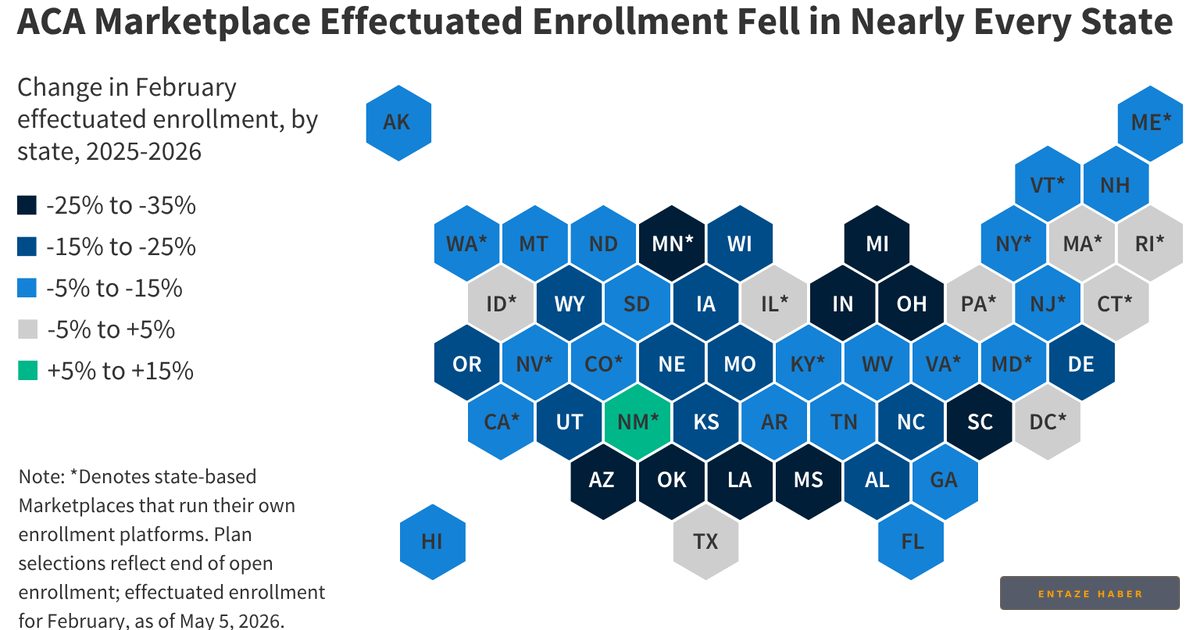
While early indicators focused on initial sign-up numbers—which decreased by about one million—the true impact is best measured by "effectuated enrollment." This metric accounts for consumers who actually paid their premiums and maintained coverage, excluding those who dropped out or failed to complete their payments. Nationwide, February effectuated enrollment dropped from a record high of 21.8 million in 2025 to 19.2 million in 2026, representing a 12% year-over-year decline.
The Financial Burden of Rising Premiums

Cost remains the primary driver behind this exodus from the insurance market. With the expiration of federal enhancements, most subsidized enrollees faced a 58% average increase in net premium payments. KFF survey data reveals that eight out of ten individuals who changed their coverage status or became uninsured identified rising costs as a key factor. Many middle-income households, who previously benefited from federal support, found themselves confronting the full market price of health insurance for the first time.
State-Level Disparities in Coverage Retention
Geographic trends highlight a clear divide in how states managed this transition. New Mexico stood out as the only state to record an enrollment increase, growing by 14%. This success is attributed to the state’s proactive decision to fully replace expiring federal subsidies with state-funded alternatives.
Conversely, states relying on the federal HealthCare.gov platform without additional local support saw a 15% decline in enrollment. State-based marketplaces, particularly those offering their own supplemental subsidies, generally maintained higher stability. Ohio and Oklahoma experienced the most dramatic losses, with enrollment falling by over 32% in each, while states like Arizona, South Carolina, and Mississippi also saw double-digit percentage drops.
Effectiveness of State-Run Platforms
Data reveals a strong correlation between administrative control and coverage retention. The ten states with the highest effectuation rates all operate their own marketplaces. In contrast, the ten states with the lowest rates rely on the federal platform. Furthermore, the national effectuation rate—the percentage of people who completed their enrollment by paying their first premium—slipped from 90% in 2025 to 83% in 2026. This data underscores that while the national landscape is shifting, localized policy interventions remain the most effective buffer against the loss of federal assistance.
Recent Developments
As the healthcare landscape continues to shift, experts are monitoring the latest updates regarding insurance affordability and coverage retention. This breaking news highlights the direct impact of policy changes on millions of Americans, providing live news updates on how individual states are responding to federal subsidy gaps. You can follow all developments instantly on MedicareTicker.com.
Related Topics
🔹 ACA Marketplace 🔹 Healthcare Policy 🔹 Health Insurance Subsidies 🔹 Medicaid Services 🔹 Premium Assistance 🔹 Public Health Trends 🔹 Federal Healthcare Reform
State-news News
This category provides comprehensive coverage of regional healthcare policy shifts and their impact on residents. Our team at MedicareTicker.com delivers breaking news and live updates to ensure you stay informed about the latest developments in your state’s insurance market.
Frequently Asked Questions
Why did ACA enrollment drop in 2026?
Enrollment decreased primarily because temporary federal enhanced premium tax credits expired at the end of 2025. This led to significantly higher out-of-pocket costs for many enrollees, causing a large portion to exit the market.
What is the difference between sign-ups and effectuated enrollment?
Sign-ups represent the total number of people who selected a plan, while effectuated enrollment counts only those who successfully paid their premiums and kept their coverage active. Many who sign up fail to make the first payment, making effectuated enrollment a more accurate measure of coverage.
Which states saw the best enrollment stability?
States that operate their own insurance marketplaces and provided state-funded subsidies, such as New Mexico, saw the highest stability. These local efforts helped offset the loss of federal funds and kept premiums more affordable for residents.