Millions Trapped in Medicaid Coverage Gap as State Expansion Stalls
Discover why 1.2 million uninsured Americans remain in the Medicaid coverage gap and how shifting federal policies could impact future health insurance access.
The Persistence of the Medicaid Coverage Gap
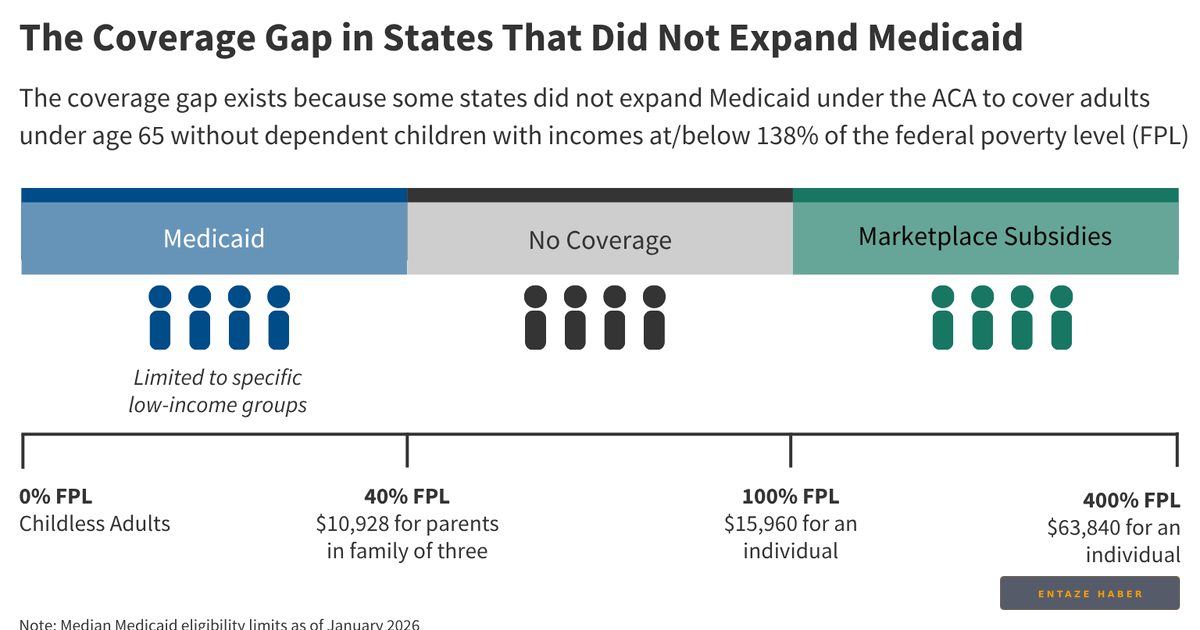
Despite a decade of progress under the Affordable Care Act (ACA), a significant portion of the American population remains without access to affordable health insurance. In the 41 states—plus the District of Columbia—that opted to expand Medicaid, adults earning up to 138% of the federal poverty level (FPL) typically qualify for coverage. However, in the ten states that have refused to adopt this expansion, roughly 1.2 million uninsured individuals are caught in a precarious "coverage gap." These citizens earn too much to meet strict state-level Medicaid eligibility requirements but fall below the threshold to qualify for ACA Marketplace subsidies, which were originally designed to begin at 100% FPL.

Demographics of the Uninsured
Data reveals that the individuals stuck in this gap are often part of the workforce. Approximately 60% of these adults live in families with at least one worker, and more than 40% are employed themselves. Many hold roles in service, retail, or construction, working as janitors, cooks, or cashiers for employers that do not provide health benefits. Furthermore, the population is disproportionately comprised of people of color, with Black and Hispanic adults representing 56% of those in the gap. Because most non-expansion states restrict Medicaid primarily to parents, 78% of those without coverage are adults who do not have dependent children.

Impact of Federal Policy Shifts
Legislative changes from the 2025 reconciliation law have altered the landscape of healthcare access. The law removed financial incentives that previously encouraged states to adopt the expansion and introduced new penalties for those that did. Additionally, the mandate for work requirements starting in January 2027—or earlier for some states—is projected to increase the total number of uninsured individuals by 5.3 million over the next decade. While these policy shifts may cause many to lose their current coverage, they do not technically add to the "coverage gap" population, as those individuals remain income-eligible for Medicaid despite failing to meet new reporting criteria.
Potential for Nationwide Coverage
If all remaining non-expansion states were to move forward with the policy, approximately 2.4 million uninsured adults could gain access to Medicaid. This group includes the 1.2 million currently in the gap and another 1.2 million who earn between 100% and 138% of the FPL but are currently navigating the Marketplace. For these individuals, Medicaid would provide a more robust safety net with significantly lower out-of-pocket costs compared to private insurance plans, especially following the expiration of enhanced tax credits.
Recent Developments
Policymakers continue to debate the future of healthcare access as new federal guidelines reshape the eligibility landscape. This breaking news highlights the latest updates regarding how state-level decisions and federal mandates influence the uninsured population. You can follow all developments instantly on MedicareTicker.com.
Related Topics
🔹 Medicaid Expansion 🔹 Affordable Care Act 🔹 Health Insurance Access 🔹 Federal Poverty Level 🔹 Healthcare Policy 🔹 Marketplace Subsidies
State-news News
This category provides essential coverage on regional healthcare policies and state-specific legislative impacts. We offer breaking news and the latest updates to keep readers informed on live developments affecting public health programs across the nation on MedicareTicker.com.
Frequently Asked Questions
What is the Medicaid coverage gap?
The coverage gap refers to individuals who earn too much to qualify for their state’s limited Medicaid program but too little to receive federal subsidies for private insurance. This occurs in states that have chosen not to expand Medicaid eligibility under the Affordable Care Act.
How many people are currently in the coverage gap?
Approximately 1.2 million uninsured adults across ten states are currently trapped in the coverage gap. These individuals often work in low-wage sectors and lack access to affordable, employer-sponsored health coverage.
Could these individuals gain coverage if states expand Medicaid?
Yes, if all remaining states adopted the expansion, about 2.4 million uninsured adults would become eligible for Medicaid. This would provide them with more comprehensive benefits and lower costs compared to current marketplace alternatives.