Who Regulates the AI Revolution in Modern Medicine?
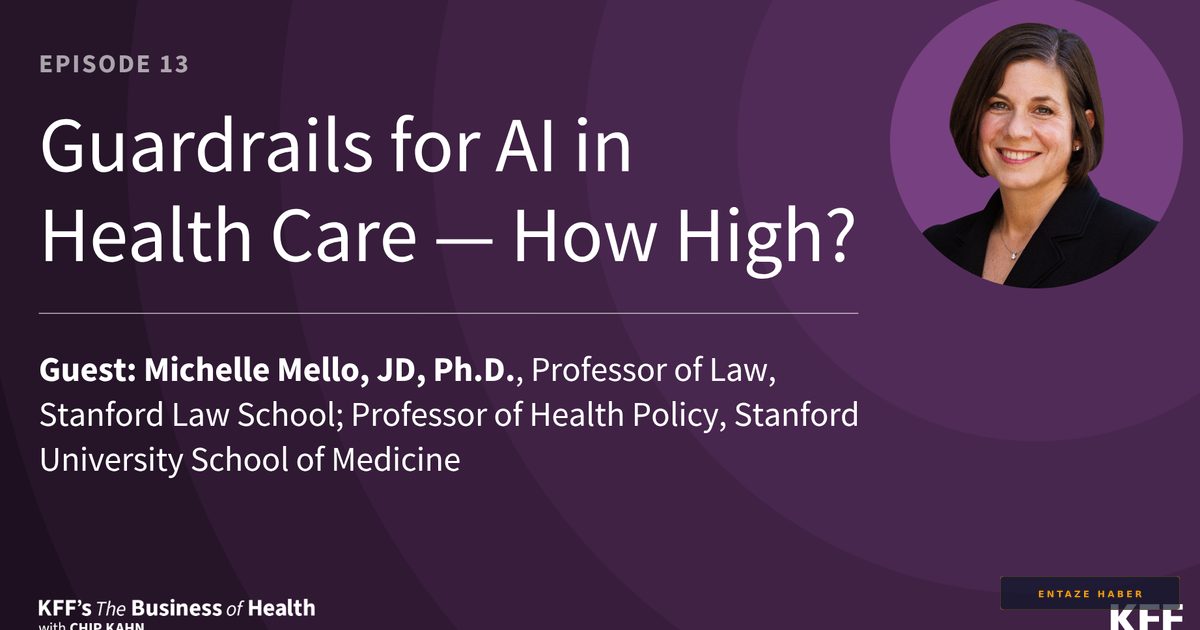
Stanford's Dr. Michelle Mello joins Chip Kahn to explore the critical need for legal and ethical guardrails as AI transforms the healthcare landscape.
Navigating the Frontier of Medical Artificial Intelligence
As artificial intelligence accelerates its integration into clinical settings, the healthcare industry faces a pivotal crossroads. The rapid deployment of machine learning tools into everyday medical practice has outpaced the development of formal regulatory frameworks. In the latest installment of "The Business of Health with Chip Kahn," host Charles N. Kahn III sits down with Dr. Michelle Mello to unpack the complex legal and ethical challenges inherent in this technological shift.

Dr. Mello, a distinguished professor at both Stanford Law School and the Stanford University School of Medicine, brings a dual perspective to this conversation. As co-director of the Healthcare Ethical Assessment Lab for Artificial Intelligence (HEAL-AI), she plays a central role in vetting new digital tools before they reach patient care environments at Stanford Health Care. The core inquiry of the episode centers on accountability: who bears the burden of oversight, and who remains liable when these systems inevitably encounter errors?
Establishing Accountability in Algorithmic Care

For decades, the standard for medical safety has relied on human clinical judgment and established malpractice law. However, AI introduces a "black box" element that complicates these traditional structures. Dr. Mello, who has authored nearly 300 academic papers on medical liability, ethics, and health policy, suggests that current regulatory mechanisms—while vital—are struggling to keep up with the velocity of innovation.
The conversation highlights the necessity for a robust infrastructure to manage AI-driven health outcomes. Whether dealing with diagnostic algorithms or administrative automation, the primary hurdle remains the lack of standardized "rules of the road." Dr. Mello emphasizes that for AI to be safely integrated into the healthcare ecosystem, institutions must proactively implement ethical assessments that bridge the gap between technical capability and patient protection.
The Role of Policy in Technological Adoption
Chip Kahn, a senior visiting fellow at KFF and a leader at the American Enterprise Institute, uses this series to connect the dots between corporate health business strategies and the real-world impact on patients. The current focus on AI reflects a broader industry movement toward system efficiency, yet it also invites scrutiny from federal bodies like the FDA and the Department of Health and Human Services (HHS).
As the industry moves forward, the focus remains on ensuring that algorithmic decision-making aligns with patient safety and institutional integrity. The insights shared by experts like Dr. Mello are critical for stakeholders who are tasked with managing the consequences of this digital transformation. By prioritizing ethical oversight now, healthcare providers may avoid the legal pitfalls that often follow disruptive technology.
Recent Developments
Industry leaders are closely monitoring the latest updates regarding AI integration to ensure patient safety remains the top priority. As breaking news in the medical technology sector continues to evolve, stakeholders are looking for clearer guidance on liability and clinical efficacy. You can follow all developments instantly on MedicareTicker.com.
Related Topics
🔹 Artificial Intelligence 🔹 Health Policy 🔹 Medical Ethics 🔹 Patient Safety 🔹 Digital Health Innovation 🔹 FDA Regulations 🔹 Healthcare Liability
State-news News
This category provides comprehensive coverage of policy changes and administrative shifts across the healthcare sector. We deliver breaking news and live updates to ensure our readers stay informed about the evolving landscape of health regulations. MedicareTicker.com serves as your primary source for accurate and timely reporting on critical state-level healthcare developments.
Frequently Asked Questions
Why are guardrails necessary for AI in healthcare?
AI systems operate with high complexity, and without formal rules, there is a risk of diagnostic errors or biased decision-making. Guardrails ensure that these tools are vetted for safety and ethical standards before they impact patient treatment.
Who is responsible when an AI tool makes a medical error?
Determining liability is an ongoing legal challenge that involves developers, healthcare institutions, and clinicians. Dr. Mello notes that as the technology evolves, the legal framework must adapt to define clear lines of accountability for all parties involved.
What is the role of HEAL-AI at Stanford?
HEAL-AI is a specialized laboratory that conducts rigorous ethical assessments of AI tools proposed for use in healthcare. Their goal is to bridge the gap between innovation and patient safety by evaluating how these systems function in a real-world clinical environment.