Global HIV Funding Plummets by $2.1 Billion as U.S. Support Retreats
Global HIV funding dropped by $2.1 billion in 2025, reaching its lowest level since 2007. Discover how U.S. policy shifts are impacting international health efforts.
A Historic Decline in Global HIV Resources
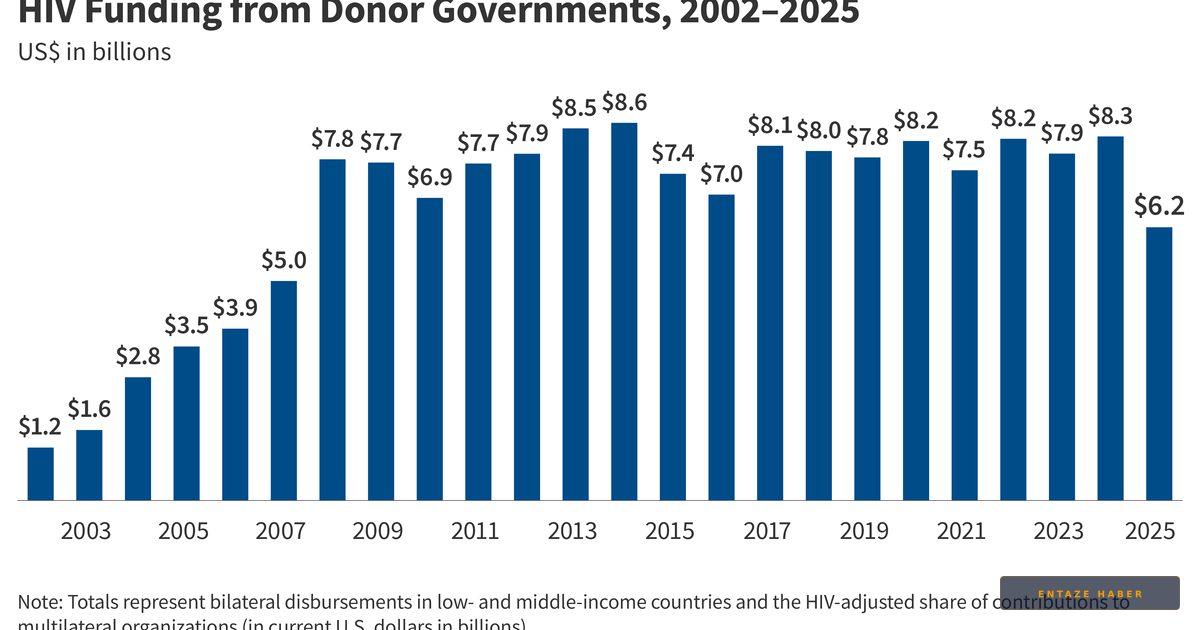
International efforts to combat HIV in low- and middle-income nations suffered a massive financial blow in 2025. Data released by KFF and the Joint United Nations Programme on HIV/AIDS (UNAIDS) reveals that donor government contributions plummeted by $2.1 billion. This 25% year-over-year contraction represents the most significant annual drop since the global HIV response scale-up initiative first launched. Total disbursements fell from $8.3 billion in 2024 to just $6.2 billion in 2025, a figure that marks the lowest level of dedicated HIV funding since 2007.

The Impact of U.S. Policy Shifts
The primary driver behind this fiscal retreat is a sharp reduction in disbursements from the United States. Following the administration’s decision to implement substantial cuts to global health personnel, programs, and overall budgets, U.S. support fell significantly. While the United States continues to hold its position as the world’s largest donor for HIV programs, its recent policy direction has created a precarious environment for global health stability.

Rising Dependence on a Volatile Source
Beyond the U.S. contribution, the landscape of international HIV funding has been narrowing for over a decade. Since 2011, funding from all other donor governments has halved, dropping from $3.2 billion to $1.6 billion by 2025. This trend has placed an outsized burden on the United States, which now accounts for 74% of all donor government funding for HIV, compared to 59% in 2011. This concentration of resources makes the entire global HIV architecture dangerously susceptible to shifting priorities within Washington.
Uncertainty Surrounding Future Global Health
Prospects for 2026 and beyond remain shrouded in ambiguity. Although the U.S. Congress has authorized consistent funding levels for HIV initiatives, the administration’s "America First Global Health Strategy" signals an intent to further curtail global health expenditures. Furthermore, the Organisation for Economic Co-operation and Development expects additional declines in development assistance throughout 2026, compounding the crisis. UNAIDS reports that overall international assistance for HIV, including philanthropic and multilateral sources, shrank by 18% between 2024 and 2025, signaling a difficult road ahead for global health security.
Recent Developments
The global health community is monitoring these budget cuts closely as breaking news continues to highlight the risks of a funding vacuum. With latest updates pointing toward continued fiscal contraction, organizations are preparing for the potential impact on patient care and prevention programs. You can follow all developments instantly on MedicareTicker.com.
Related Topics
🔹 Global Health Policy 🔹 HIV/AIDS Research 🔹 International Development 🔹 Public Health Funding 🔹 UNAIDS Reports 🔹 Global Health Security 🔹 U.S. Foreign Aid
State-news News
This category covers breaking news regarding regional and international policy shifts that affect public health infrastructure. We provide live updates on how state and federal budgetary decisions impact the global population, ensuring our readers stay informed via MedicareTicker.com.
Frequently Asked Questions
Why did HIV funding drop so significantly in 2025?
Funding fell by $2.1 billion primarily due to substantial cuts in global health programs and personnel implemented by the U.S. administration. This shift caused total global donor disbursements to reach their lowest levels since 2007.
How much of the total HIV funding does the U.S. provide?
The U.S. currently provides 74% of all donor government funding for HIV. This concentration increased from 59% in 2011 as other nations reduced their bilateral support.
What is the outlook for HIV funding in 2026?
The future remains uncertain as the administration pursues an 'America First' strategy that prioritizes cutting global health budgets. Projections from the OECD suggest further declines in development assistance for the coming year.