Life's Grand Conductor: Scientists Unveil Master Genetic Clock Orchestrating Development
Cold Spring Harbor Lab discovers the MYRF-1/LIN-42 protein complex, a non-repeating master clock controlling C. elegans development, offering insights into growth disorders.
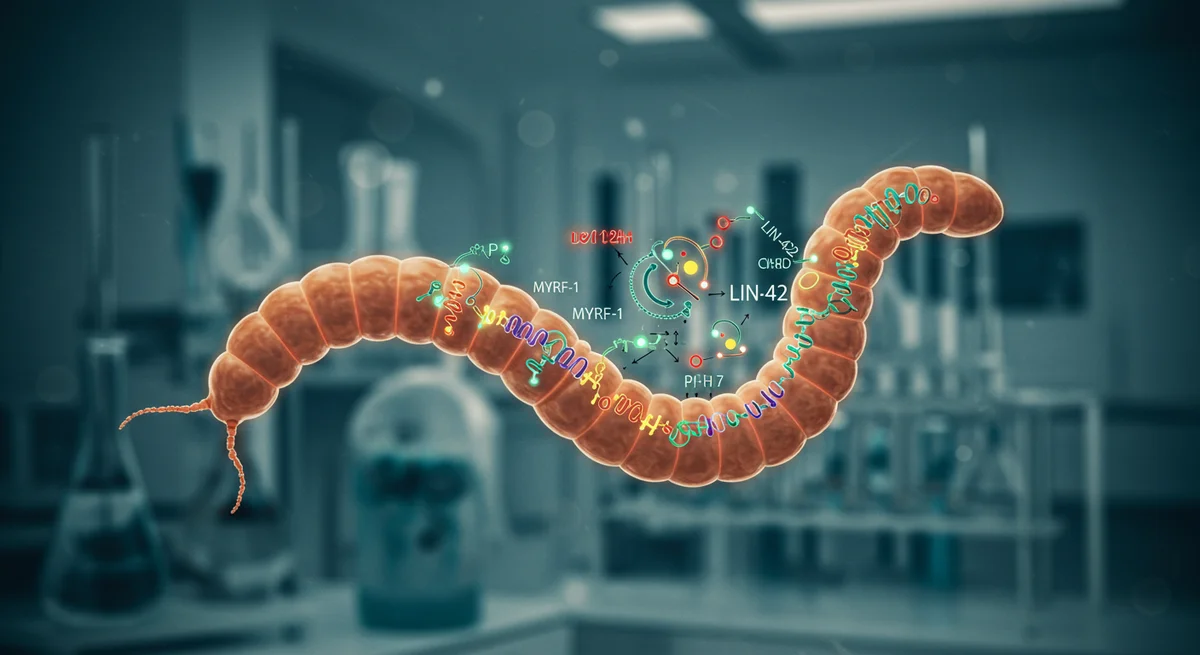
Groundbreaking Discovery in Developmental Biology
Scientists at Cold Spring Harbor Laboratory (CSHL) have recently brought to light a fundamental biological timekeeper responsible for guiding organismal development. This newly identified genetic mechanism precisely orchestrates critical surges of gene activity throughout a creature's maturation phases. Should this intricate developmental clock malfunction, the entire growth process can halt, potentially providing new avenues for understanding the origins of various growth-related medical conditions.
To illustrate the critical nature of this timing system, consider a fully prepared train poised for departure at a bustling station. All passengers are aboard, tickets verified, and all systems indicate readiness. Yet, if the engineer's timepiece fails, the locomotive remains stationary. Its doors stay ajar, the departure signal is never sounded, and the intended voyage never commences. A parallel scenario can unfold within living cells; a compromised timing system for development could prevent an organism from successfully traversing the necessary stages to achieve adulthood.
Researchers at CSHL have now pinpointed what appears to be the central developmental clock within the microscopic worm, *C. elegans*. This significant finding illuminates how cells diligently maintain the schedule for growth and development by synchronizing a sequence of precisely timed bursts of genetic activity.
Unraveling the Master Timekeeper's Mechanism
Several years prior, CSHL Professor Christopher Hammell and his team established that the progression of development in *C. elegans* is propelled by distinct pulses of gene expression. These intermittent surges of genetic activity occur in a specific order, guiding the organism through each successive growth stage. However, the precise mechanism governing the timing of these pulses remained elusive.
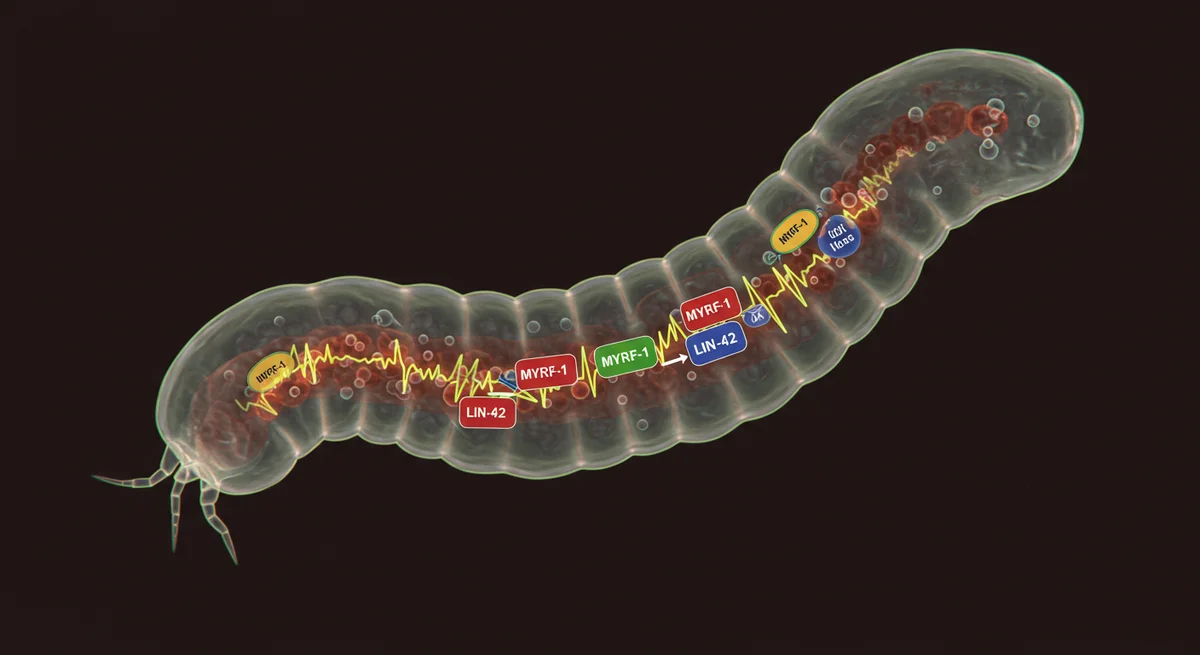
Through their latest investigations, the research group has uncovered that two specific proteins, MYRF-1 and LIN-42, establish a feedback loop that functions as the core developmental chronometer within the worm's genome. Together, these proteins dictate both the initiation and the duration of each gene expression pulse. According to the scientists, this represents the inaugural instance of a non-repeating biological clock of this nature being identified.
“This serves as the central clock for every cell within the worm,” Hammell elucidated. “Its role is to coordinate a finite sequence of sequential gene expression pulses, which must occur only once and in a specific order for proper developmental progression. It operates akin to a ratchet, activating and deactivating genes multiple times throughout development, yet its ultimate trajectory is consistently forward.”
The Interplay of MYRF-1 and LIN-42 in Growth Regulation
To decipher the operational mechanics of this clock, the researchers employed a multifaceted approach, combining conventional molecular biology experiments with advanced DNA sequencing, protein sequencing, and the artificial intelligence tool AlphaFold.
Their findings indicated that MYRF-1 performs several indispensable functions during development. This protein acts as the initial trigger for each developmental stage and is also essential for the checkpoint mechanism that signifies its completion. Once a surge of gene activity commences, MYRF-1 activates LIN-42, which then assists in regulating the intensity and lifespan of that genetic pulse. The combined action of these two proteins guarantees that development proceeds in the correct sequence and at the appropriate rate.
When researchers experimentally inhibited MYRF-1, the entire developmental program disintegrated. “We have never witnessed such a phenomenon before,” Hammell remarked. “MYRF-1 is not only an integral component of this master regulatory clock for all cells, but it also acts as both a key maker and the master key for each growth stage. Without the correct key for every stage, development encounters an insurmountable barrier and cannot advance.”
Synchronicity of Cellular Clocks and Future Inquiries
The research team also includes CSHL Director of Research Leemor Joshua-Tor. Their immediate objective is to gain a deeper understanding of the physical interactions between MYRF-1 and LIN-42 and how these developmental clocks operate across diverse cell types.
One of the most compelling questions that remains is whether individual cellular clocks engage in communication with one another during development. “The MYRF-1/LIN-42 circuit is active in all cells,” Hammell stated. “And each of these independent cellular clocks appears to maintain synchrony when observing normal development. However, do they actively communicate with each other? We haven’t previously explored that question in depth.”
Broad Implications for Developmental Disorders
Acquiring knowledge about how developmental clocks function and maintain synchronization could yield profound insights into cellular growth, differentiation processes, and the formation of tissues and organs. In the future, this research may also contribute significantly to scientists' comprehension of developmental disorders and specific genetic illnesses. By revealing how the body's intrinsic timing systems propel growth forward, these discoveries could ultimately pave the way for novel strategies to address conditions where normal development is disrupted.
Much like a train that finally receives the all-clear signal to leave the station, the newly identified MYRF-1/LIN-42 clock appears instrumental in ensuring that development progresses steadily, one stage at a time.
Materials for this report were provided by Cold Spring Harbor Laboratory. The study, titled "A molecular timer couples organism-wide temporal identity to developmental checkpoints," was authored by Peipei Wu, Jing Wang, Brett Pryor, Isabella Valentino, David F. Ritter, Kaiser Loel, Olya Yarychkivska, Shai Shaham, Justin Kinney, Sevinc Ercan, Leemor Joshua-Tor, and Christopher M. Hammell. It was published in the *Proceedings of the National Academy of Sciences* on June 4, 2026, with DOI: 10.1073/pnas.2606846123.
Latest Updates on this Story
This breaking news illuminates a fundamental aspect of biological development, with ongoing research poised to uncover deeper mechanisms and potential applications. As scientists continue to explore cellular communication and the broader implications for human health, we anticipate further live coverage and current news on this evolving topic. You can monitor all live updates on this story in real-time on MedicareTicker.com.
Related Topics
🔹 Biological Clocks 🔹 Gene Regulation 🔹 Developmental Biology 🔹 Genetic Disorders Research 🔹 Cell Differentiation 🔹 Protein Function 🔹 C. elegans Research 🔹 Cold Spring Harbor Laboratory
About MedicareTicker News
MedicareTicker.com's news section provides comprehensive and up-to-date coverage on crucial health, scientific, and policy developments impacting senior care and health insurance. Our expert analysis on breakthrough research, like this discovery, ensures our readers remain informed on advancements that could shape future medical treatments and understanding of age-related conditions. We are the leading independent resource for navigating the complex landscape of health and aging news.
Frequently Asked Questions
What is the newly discovered "master developmental clock"?
Researchers at Cold Spring Harbor Laboratory have identified a genetic timing mechanism, dubbed a "master developmental clock," that precisely coordinates the sequence and duration of gene activity bursts essential for an organism's growth and progression through life stages.
Which proteins are central to this biological timing mechanism?
The core of this master clock is formed by a feedback circuit involving two specific proteins: MYRF-1 and LIN-42. They work in tandem to control when gene expression pulses begin and how long they last.
What are the potential implications of this research for human health?
This discovery could significantly advance the understanding of cellular growth, differentiation, and organ development. It offers fresh insights into how growth-related and certain genetic disorders might arise, potentially leading to new strategies for addressing conditions where normal development is disrupted.
How did researchers identify this intricate clock?
The research team utilized a combination of traditional molecular biology experiments, DNA sequencing, protein sequencing, and the artificial intelligence tool AlphaFold to uncover the mechanism and the critical roles played by the MYRF-1 and LIN-42 proteins.