Who Are the 12 Million Dual-Eligible Americans? New Data Reveals Critical Health Gaps
New data reveals the demographic and health profile of the 12 million Americans dually enrolled in Medicare and Medicaid. Discover the key findings here.
Understanding the Dual-Eligible Population
Roughly 12 million Americans currently rely on both Medicare and Medicaid for their healthcare needs. These individuals, known as "dual-eligible" beneficiaries, navigate a complex system where Medicare acts as their primary insurer while state-run Medicaid programs provide essential supplementary support. Within this cohort, approximately 9 million people are classified as "full-benefit" enrollees, granting them access to services not covered by Medicare, such as long-term care, dental, and vision benefits. The remaining 3 million individuals fall into the "partial-benefit" category, where assistance is primarily restricted to covering Medicare premiums and cost-sharing through Medicare Savings Programs.

Demographic and Socioeconomic Realities
Recent data from the 2023 Medicare Current Beneficiary Survey (MCBS) highlights stark differences between dual-eligible individuals and those solely on Medicare. One of the most significant findings is that dual-eligible beneficiaries are younger, with 34% under age 65, compared to just 6% of the non-Medicaid Medicare population. This younger group often qualifies for federal coverage due to long-term disabilities. Furthermore, the economic disparity is profound: 64% of dual-eligible enrollees report an annual income below $20,000, whereas only 9% of their counterparts without Medicaid fall into this bracket.

The racial and ethnic composition also differs significantly. Dual-eligible beneficiaries are disproportionately people of color, with 22% identifying as Black and 21% as Hispanic. In contrast, these groups represent only 8% and 6% of non-dual-eligible Medicare beneficiaries, respectively. Additionally, educational attainment levels are lower among the dual-eligible population, with over one-third having less than a high school diploma.
Health Status and Institutional Care Needs
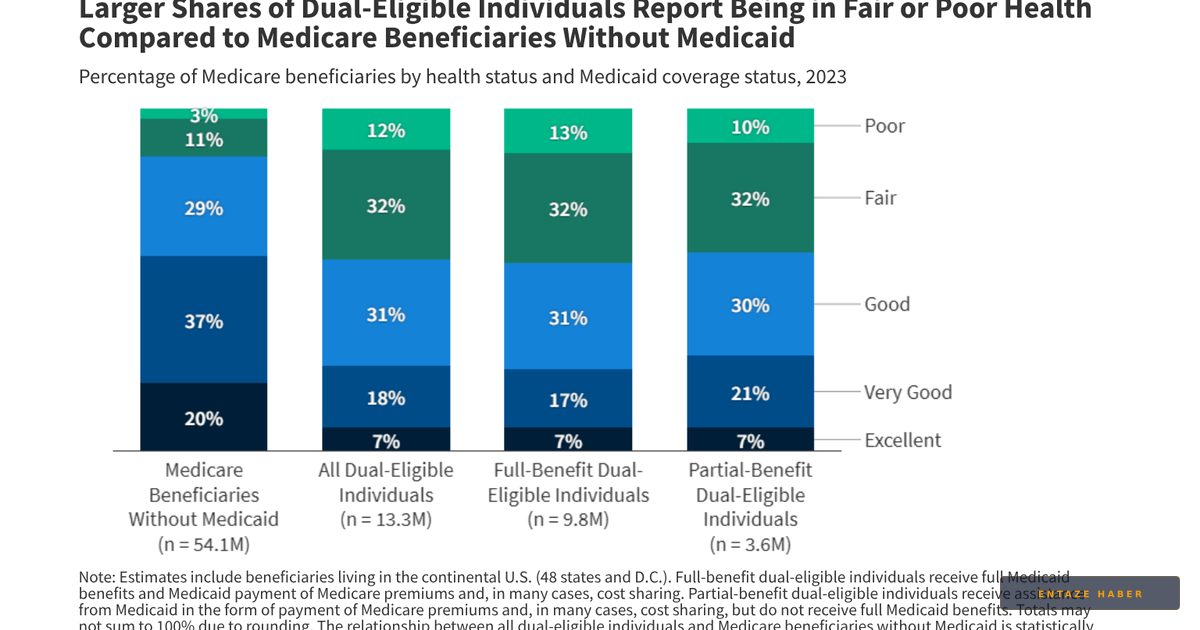
Health outcomes for this population are notably worse than the broader Medicare demographic. A full 44% of dual-eligible individuals report their health as fair or poor, a rate nearly three times higher than those not on Medicaid. Daily living activities, such as bathing or dressing, present challenges for 47% of this group, while 36% struggle with cognitive impairments.
Institutional care highlights another major divide. Because Medicaid serves as the primary payer for long-term care—where a private nursing home room averaged $116,800 in 2023—a much higher percentage of full-benefit dual-eligible individuals reside in nursing homes or similar facilities compared to the general Medicare population. These individuals also face higher rates of mental health conditions and intellectual disabilities, which complicates their ability to manage fragmented care across two distinct government programs.
Recent Developments
As the healthcare landscape shifts following 2025 budget reconciliation laws, policymakers are closely monitoring how reduced federal spending impacts vulnerable populations. This breaking news highlights that as states face fiscal pressure, the latest updates regarding potential coverage cuts for optional benefits remain a critical concern for millions. You can follow all developments instantly on MedicareTicker.com.
Related Topics
🔹 Medicaid Policy 🔹 Medicare Savings Programs 🔹 Long-Term Care 🔹 Healthcare Disparities 🔹 Dual-Eligible Beneficiaries 🔹 Health Equity 🔹 Public Health Funding
Comparisons News
This category provides live, in-depth coverage of how different healthcare programs and beneficiary groups compare across the United States. MedicareTicker.com delivers the latest updates and breaking news to ensure you understand how policy changes affect insurance coverage and patient outcomes.
Frequently Asked Questions
What is the difference between full-benefit and partial-benefit dual-eligible status?
Full-benefit enrollees receive comprehensive Medicaid assistance for services Medicare does not cover, such as dental and long-term care. Partial-benefit enrollees receive help primarily with Medicare premiums and cost-sharing obligations.
Why are dual-eligible individuals more likely to live in nursing homes?
Medicaid is the primary payer for long-term care in the U.S. Because many dual-eligible beneficiaries have limited income and savings, they rely on Medicaid to cover the high costs of institutional care after exhausting their personal resources.
How does cognitive impairment affect this population?
Approximately 36% of dual-eligible individuals report cognitive impairments compared to 12% of others. This makes navigating the fragmented Medicare and Medicaid systems significantly more difficult, often leading to lower-quality care.