Digital Doctors: Why Americans Are Choosing Social Media and AI Over Traditional Clinics
A new KFF poll reveals 31% of U.S. adults seek health advice via social media monthly, while AI usage for medical inquiries has nearly doubled since 2024.
The Shift Toward Digital Health Advice
Modern healthcare is undergoing a significant transformation as millions of Americans increasingly look past traditional clinical settings for medical guidance. According to the latest KFF Tracking Poll on Health Information and Trust, 31% of U.S. adults now utilize social media platforms at least once a month to gather health insights or seek advice. Simultaneously, the adoption of artificial intelligence tools—such as ChatGPT, Google Gemini, and Claude—has surged. Approximately 29% of adults now employ these chatbots for health-related queries, a figure that has nearly doubled from the 17% recorded two years ago.

Despite this growth, the majority of the population remains cautious. Approximately 71% of adults report that they never or only occasionally lean on AI for health guidance, while 69% say the same regarding social media platforms.
Demographic Divides in Digital Adoption

The pathways people take to find health information are deeply tied to their demographic background. Younger adults, particularly those aged 18 to 29, demonstrate the highest engagement with both social media and AI tools. However, the profiles of these users differ significantly. Social media health inquiries are more prevalent among lower-income individuals, Black, and Hispanic populations. In contrast, AI users are more likely to have higher levels of education and income, with usage remaining relatively consistent across various socioeconomic groups.
Hispanic adults represent a unique segment of the population, showing high adoption rates for both AI and social media as sources of health-related information. Conversely, White adults are statistically less likely to use either medium for medical advice.
Drivers of Digital Health Seeking
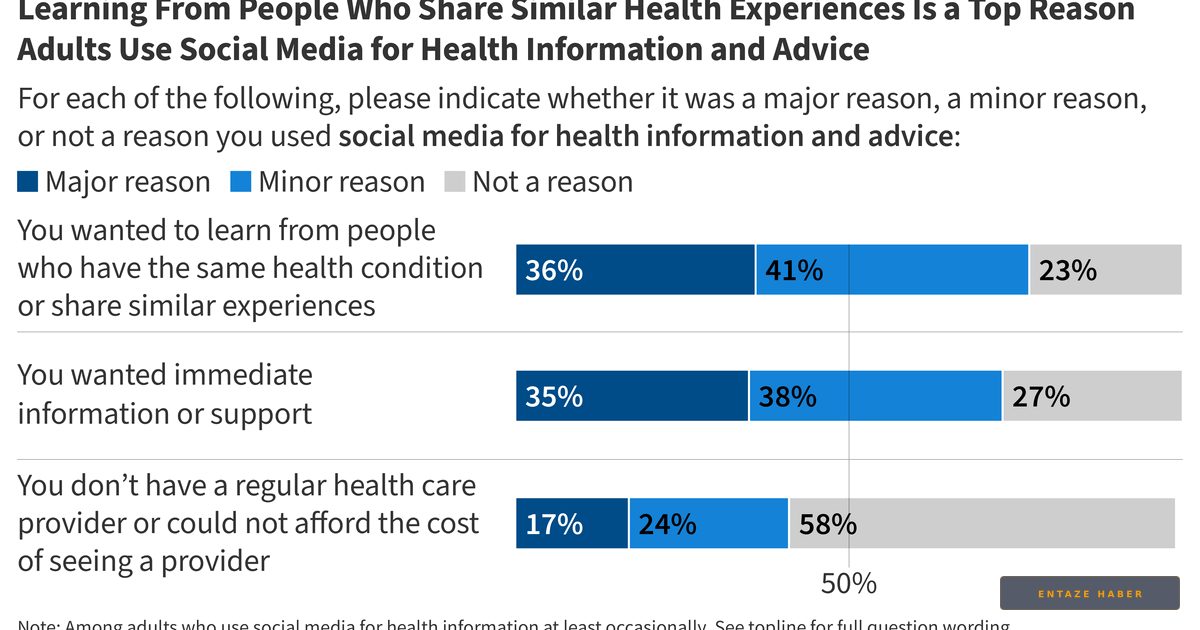
Why are Americans turning to screens instead of stethoscopes? For social media users, the motivation is often twofold: a desire for immediate support and the pursuit of community. Over one-third of these users report that connecting with others who share their specific health conditions is a primary factor in their behavior. Another 35% cite the need for instant responses as a major driver.
Financial barriers also play a critical role. Among uninsured adults and the LGBT community, the inability to afford professional medical services or the lack of a regular healthcare provider accounts for a significant portion of digital health seeking. Data from the March 2026 KFF Tracking Poll highlights that nearly one in five users turn to AI or social media specifically because they lack access to a traditional provider or cannot manage the associated costs.
Validating the Truth
Confidence in digital information remains high among those who use it, yet verification habits are surprisingly lax. While roughly 60% of users express confidence in their ability to distinguish fact from fiction on these platforms, few take the necessary steps to confirm their findings with medical professionals. Only 36% of social media users consistently follow up with a doctor, while even fewer rely on verified government health websites like the CDC to confirm the accuracy of what they have read.
Recent Developments
This breaking news highlights the shifting landscape of patient behavior in the digital age. As the latest updates show, reliance on non-traditional sources for medical advice is becoming a mainstream trend that health agencies must address. You can follow all developments instantly on MedicareTicker.com.
Related Topics
🔹 Digital Health 🔹 Artificial Intelligence in Medicine 🔹 Public Health Trends 🔹 Social Media Impact 🔹 Healthcare Access 🔹 Patient Advocacy 🔹 Medical Misinformation
State-news News
This category provides breaking news and the latest updates on public health trends across the United States. MedicareTicker.com delivers live, accurate reporting on how policy and social shifts impact the healthcare landscape for citizens nationwide.
Frequently Asked Questions
Why are Americans increasingly turning to AI for health advice?
Many users seek out AI tools because they provide immediate information at no cost. This is especially prevalent among those who lack a regular healthcare provider or struggle with the financial burdens of traditional medical consultations.
Do people verify the health information they find online?
Most users do not consistently verify information. Fewer than four in ten social media users verify their findings with a doctor or a government health website, despite most users expressing confidence in their own ability to discern truth from falsehood.
Are younger people more likely to use digital health tools?
Yes, adults aged 18 to 29 are the most likely cohort to utilize both social media and AI for health information. This age group shows higher confidence in their ability to filter through digital information compared to older generations.