Medicaid Spending Under Pressure: $100 Billion State Directed Payment Landscape Shifts
New federal limits are set to reshape Medicaid State Directed Payments as annual spending hits $137 billion. Discover how these changes impact states.
The $137 Billion Medicaid Payment Landscape
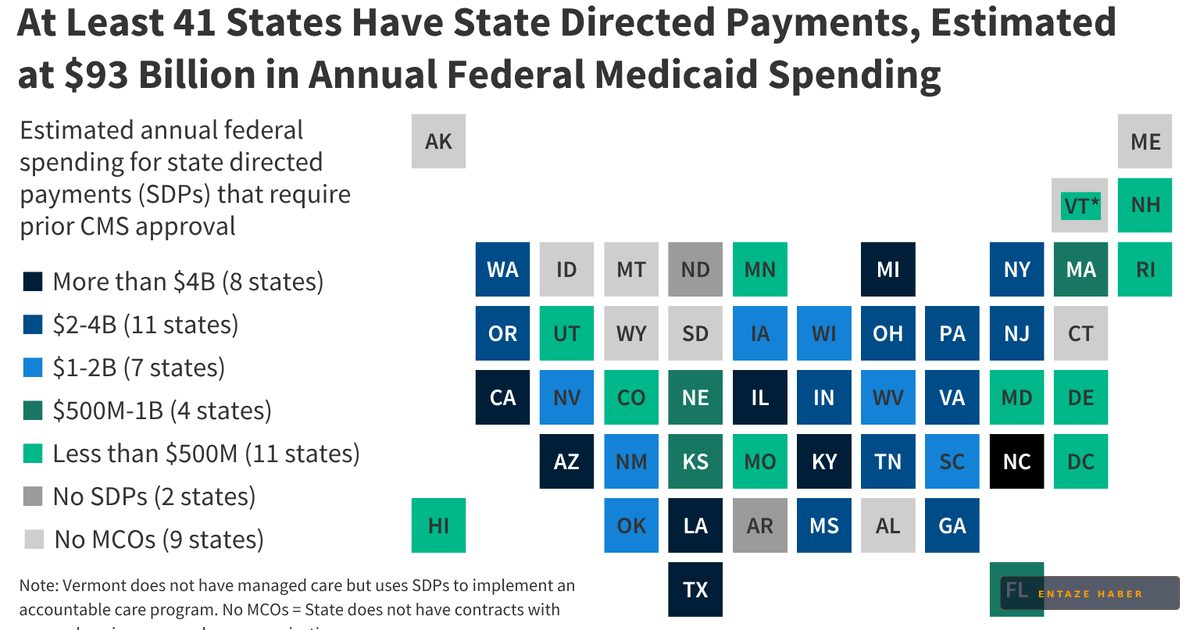
State Directed Payments (SDPs) have emerged as a massive financial pillar within the Medicaid program, with current annual spending reaching $137 billion. Of this total, the federal government contributes approximately $93 billion. These mechanisms allow states to influence how Managed Care Organizations (MCOs) compensate healthcare providers, effectively acting as supplemental payments that bypass traditional fee-for-service limitations. As of current reporting, 41 states utilize these structures to bolster provider participation and enhance access to care.

The Impending Regulatory Shift
The 2025 reconciliation law introduces a seismic shift in how these funds are managed, aiming for a federal spending reduction of $911 billion through 2034. A significant portion of these savings will originate from tighter restrictions on SDPs. Because states have increasingly used these payments to bridge gaps between Medicaid and commercial reimbursement rates, federal regulators are moving to standardize and limit the scope of these financial arrangements. Data derived from 305 approved preprints suggests that the landscape for these payments is about to undergo a significant transition.

Concentration in Hospital Services
Financial data reveals a heavy reliance on SDPs to support hospital infrastructure. Roughly 84% of all federal SDP spending—totaling approximately $78 billion—is currently funneled into hospital services. While other sectors such as nursing facilities and academic medical centers receive support, the hospital sector remains the primary beneficiary of these directed payment models. Furthermore, 84% of total SDP funding is benchmarked against commercial, private-sector payment rates, creating a complex financial web where specific payment levels often remain obscured from the public eye.
Financing Challenges and Transparency Gaps
Tracing the flow of money within SDPs is complicated by the variety of state financing methods. Many states leverage intergovernmental transfers and provider taxes to generate the non-federal share of these payments. According to data, 81% of SDPs with rates exceeding Medicare levels rely partially or entirely on these complex financing structures. This makes it difficult to assess how much of the payment represents genuine new revenue for providers versus recycled state funds. Additionally, reporting gaps persist; while states must submit preprints for CMS approval, there is no standardized national repository for actual expenditure data, though new T-MSIS reporting requirements scheduled for September 2026 aim to address this visibility problem.
State-by-State Disparities
Usage of SDPs varies drastically across the country. California leads the nation with $10.6 billion in projected federal SDP spending, followed by Texas, North Carolina, and Illinois. Conversely, states like Vermont, Maryland, and Missouri report significantly lower utilization. Even in states where managed care is the standard, the structure and number of SDPs can range from a single program to nearly 30 distinct payment directives, as seen in New Jersey. These variations ensure that the upcoming federal policy changes will affect state budgets and provider reimbursements in highly uneven ways.
Recent Developments
Legislators and federal agencies are currently finalizing the implementation of new Medicaid payment constraints. This breaking news reflects the latest updates in federal health policy as the 2025 reconciliation law enters its active phase. Stakeholders are monitoring live news regarding state compliance and the potential impact on provider revenue streams. You can follow all developments instantly on MedicareTicker.com.
Related Topics
🔹 Medicaid Policy 🔹 Healthcare Finance 🔹 Federal Budget Cuts 🔹 Provider Reimbursement 🔹 Managed Care Organizations 🔹 CMS Regulations 🔹 State Health Budgets
State-news News
This category covers breaking news and the latest updates concerning state-level healthcare policy, Medicaid administration, and legislative shifts. We provide live reporting on how federal mandates intersect with state health programs to keep you informed. MedicareTicker.com remains your primary source for developments impacting state healthcare delivery.
Frequently Asked Questions
What are State Directed Payments (SDPs)?
SDPs are mechanisms where states require Medicaid Managed Care Organizations to pay specific rates or use certain payment structures to providers. They are designed to improve access to care by mimicking supplemental payments found in fee-for-service Medicaid.
Why is federal spending on SDPs being limited?
The 2025 reconciliation law aims to reduce federal Medicaid spending by $911 billion over a decade. By placing stricter limits on SDPs, the federal government intends to curb rising costs and ensure greater transparency in how healthcare funds are distributed.
How do provider taxes affect SDP financing?
Many states use provider taxes and intergovernmental transfers to fund the state share of Medicaid payments. This creates a circular financing model where it is difficult to determine if the provider is receiving new revenue or simply receiving back funds they contributed through taxes.