Federal Medicaid Shakeup: $100 Billion in Directed Payments Facing Drastic Cuts
New federal regulations are set to slash $100 billion in annual Medicaid state-directed payments, significantly impacting hospitals across 41 states.
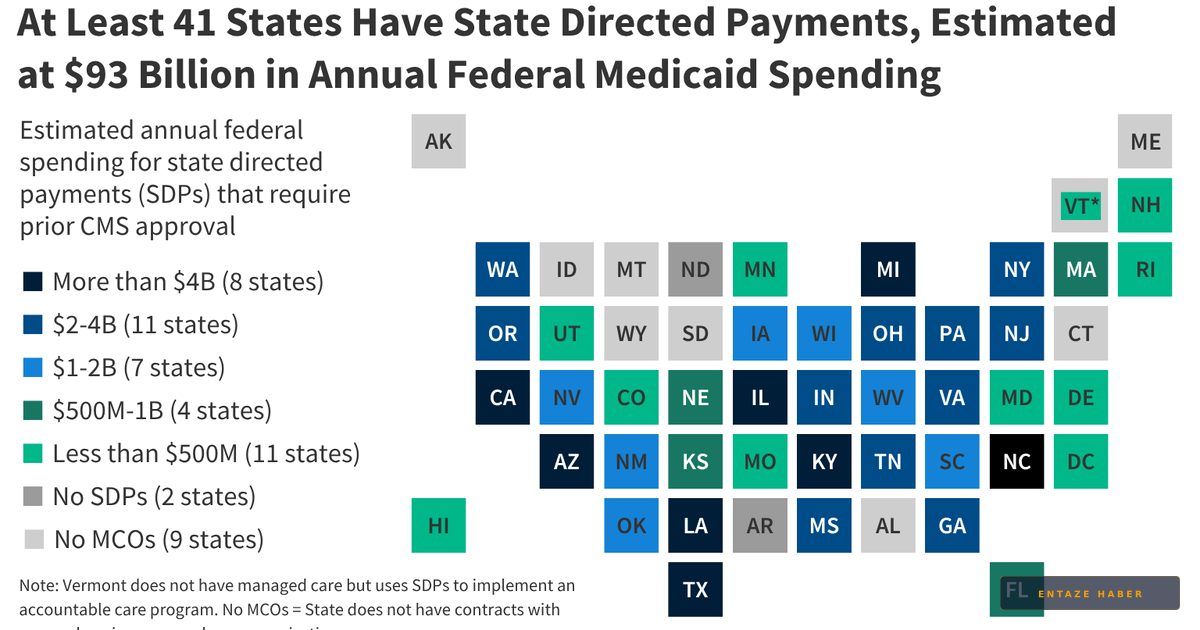
Federal Spending Shifts Under New Medicaid Rules
A massive financial transformation is underway within the Medicaid program as federal authorities move to tighten controls on state-directed payments (SDPs). Currently, 40 states and the District of Columbia funnel approximately $93 billion in annual federal Medicaid funding through these mechanisms. However, this substantial stream of capital faces significant contraction due to incoming regulatory caps. California leads the nation in this category, capturing roughly $10.6 billion annually, followed by Texas at $6.3 billion, North Carolina at $5.2 billion, and Illinois at $5.1 billion.

The Heavy Reliance on Hospital Funding
The vast majority of this federal investment—nearly 84% or $78 billion—is specifically earmarked for hospital services. Beyond acute care, professional services at academic medical centers receive about $3.2 billion, while nursing facilities account for $2.1 billion. These payments, which emerged in 2016, empower states to dictate how managed care organizations compensate providers. Historically, states have tied these payments to commercial insurance rates, which far exceed standard Medicare reimbursement levels, to bolster provider networks.

Legislative Caps and Future Fiscal Impact
Starting in 2024, CMS rules solidified the use of commercial rate benchmarking, but the landscape shifted rapidly with the 2025 reconciliation law. This legislation mandates that future SDPs align with Medicare-level rates rather than higher commercial benchmarks. The Centers for Medicare and Medicaid Services (CMS) project that these adjustments, coupled with proposed rule expansions, will strip $510 billion from federal Medicaid expenditures between 2026 and 2035. As these policies take hold, the fiscal pressure on safety-net hospitals—those serving the most vulnerable Medicaid populations—is expected to intensify, raising concerns regarding potential service reductions or facility closures.
Recent Developments
The latest updates regarding Medicaid financing highlight a significant shift in how states manage provider reimbursement. This breaking news reflects a broader effort by federal regulators to standardize payment structures, and we are monitoring the situation as live news unfolds. You can follow all developments instantly on MedicareTicker.com.
Related Topics
🔹 Medicaid Policy 🔹 Healthcare Financing 🔹 CMS Regulations 🔹 Hospital Funding 🔹 State-Directed Payments 🔹 Federal Budget Cuts 🔹 Managed Care
State-news News
This category covers breaking news and latest updates regarding legislative and fiscal shifts at the state level. We provide live coverage of how federal policy changes impact regional healthcare systems, ensuring our audience at MedicareTicker.com stays informed on critical developments.
Frequently Asked Questions
Why are state-directed payments being capped?
The federal government is capping these payments to align reimbursement rates more closely with Medicare levels rather than commercial rates. This move is intended to control long-term federal Medicaid spending and standardize payment practices across states.
Which states are most affected by these changes?
States with the highest current reliance on these payments, such as California, Texas, North Carolina, and Illinois, face the most significant financial adjustments. These states currently receive billions in federal funds that will now be subject to stricter federal limits.
What is the projected financial impact on hospitals?
Because hospitals receive approximately 84% of all SDP funding, they are the most vulnerable to these cuts. Experts warn that safety-net hospitals, in particular, may struggle to maintain current service levels as federal support diminishes over the next decade.