Unmasking Algorithmic Bias: Dr. Ziad Obermeyer on the Future of AI in Healthcare
Dr. Ziad Obermeyer joins Chip Kahn on 'The Business of Health' to discuss the evolution of AI bias in patient care and the path toward equitable medical algorithms.
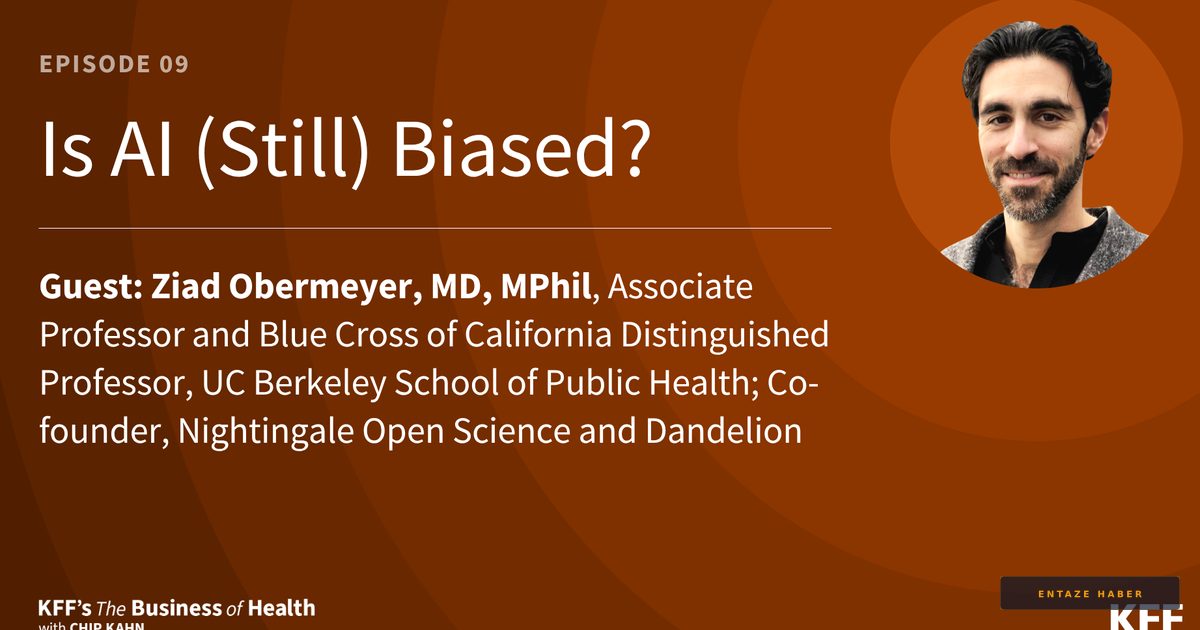
Challenging the Algorithmic Status Quo
In the ninth installment of 'The Business of Health' podcast series, host Chip Kahn welcomes Dr. Ziad Obermeyer to confront a critical question: Does artificial intelligence still harbor dangerous biases? The conversation revisits the landmark research conducted by Dr. Obermeyer, which famously exposed how a pervasive healthcare algorithm systematically underestimated the medical needs of Black patients. Since that revelation, the industry has faced a reckoning regarding how data-driven tools shape clinical outcomes.

Dr. Obermeyer, an emergency physician and associate professor at the UC Berkeley School of Public Health, argues that while AI possesses the raw power to process information with incredible speed, it is the human context—the 'why' and 'how' behind the data—that dictates whether an algorithm serves patients or ignores them. The discussion highlights that technical precision is insufficient if the foundational logic ignores systemic health disparities.
Bridging Clinical Reality and Computational Logic

Dr. Obermeyer brings a unique perspective to the table, blending his clinical work in emergency departments with his role as a researcher and co-founder of Nightingale Open Science and Dandelion. His career is defined by efforts to integrate computational innovation directly into patient care. By focusing on the 'Algorithmic Bias Playbook,' published in 2021, he provides a roadmap for hospitals to move beyond theoretical concerns and implement tangible, accountable changes in their AI infrastructure.
Chip Kahn, a senior visiting fellow at KFF, facilitates this deep dive into the business of health, exploring how AI is not merely an administrative tool but a fundamental shift in medical practice. The episode examines how AI can transition from a source of bias to a catalyst for medical discovery, provided that the measurement paradigm itself is dismantled and rebuilt with equity as a core metric.
Redefining Patient-Centered Technology
As the technology evolves, the focus shifts toward the practical application of AI in health systems. Dr. Obermeyer remains a leading voice in this space, having been recognized by TIME Magazine as one of the 100 most influential people in AI. His work with the National Bureau of Economic Research and his background as a former McKinsey consultant inform his pragmatic approach to policy and implementation. Throughout the episode, Kahn and Obermeyer connect the dots between high-level policy, the business interests of health systems, and the ultimate impact on individual patients, ensuring that the promise of AI is matched by a commitment to fairness.
Recent Developments
Healthcare experts are currently tracking breaking news regarding the integration of AI in clinical settings as agencies like the FDA refine their oversight. These latest updates highlight a critical push for transparency in algorithmic decision-making to ensure patient safety remains at the forefront of innovation. You can follow all developments instantly on MedicareTicker.com.
Related Topics
🔹 Artificial Intelligence 🔹 Healthcare Equity 🔹 Algorithmic Bias 🔹 Medical Innovation 🔹 Patient Care Standards 🔹 Health Policy 🔹 Clinical Decision Support
State-news News
This category provides comprehensive coverage of regional and national healthcare policy shifts that impact the public. At MedicareTicker.com, we deliver breaking news and live updates to keep you informed on the latest developments in medical administration and technology.
Frequently Asked Questions
What was the main finding of Dr. Obermeyer’s initial research on AI bias?
Dr. Obermeyer’s research revealed that a widely used healthcare algorithm was systematically underestimating the health needs of Black patients. This discovery forced the healthcare industry to confront how biased data inputs lead to inequitable patient care.
Why is context important for AI in medicine?
While AI can process vast amounts of data with high precision, Dr. Obermeyer emphasizes that the context surrounding the data determines its fairness. Without understanding the social and clinical realities behind the numbers, AI can inadvertently perpetuate existing healthcare disparities.
What is the 'Algorithmic Bias Playbook'?
Published in 2021, the 'Algorithmic Bias Playbook' serves as a practical guide for healthcare providers and developers. It provides actionable steps to identify, mitigate, and monitor bias within medical algorithms to improve clinical decision-making.