Nearly 4 Million Seniors Qualify for Upcoming Medicare GLP-1 Weight Loss Program
Discover if you qualify for the new Medicare GLP-1 Bridge program launching in 2026. Nearly 4 million beneficiaries may be eligible for weight management support.
A New Horizon for Weight Management
Starting July 1, 2026, the Centers for Medicare & Medicaid Services (CMS) will launch a temporary initiative titled the Medicare GLP-1 Bridge. This program aims to provide coverage for specific GLP-1 medications intended for weight reduction and management. While these drugs have historically been excluded from standard Medicare coverage due to statutory prohibitions, this new program utilizes Section 402 demonstration authority to bypass those restrictions for a limited duration, running through December 2027.

Participants in this bridge program will be responsible for a $50 monthly copayment. Notably, these costs will remain separate from the standard Part D benefit structure, meaning they will not contribute to annual out-of-pocket spending caps or deductibles, and existing Low-Income Subsidy assistance will not apply to these specific payments.
Eligibility Criteria and Clinical Requirements

The program covers three specific medications: Wegovy, Zepbound, and Foundayo. To qualify, beneficiaries must meet strict clinical benchmarks. Unlike broader FDA approvals, the Medicare criteria are more targeted. Patients must have a BMI of 35 or higher, or a BMI of 30 or higher coupled with specific comorbidities such as heart failure with preserved ejection fraction, uncontrolled hypertension, or stage 3a chronic kidney disease. Those with a BMI of 27 or higher may also qualify if they present with pre-diabetes, a history of stroke, myocardial infarction, or symptomatic peripheral artery disease.
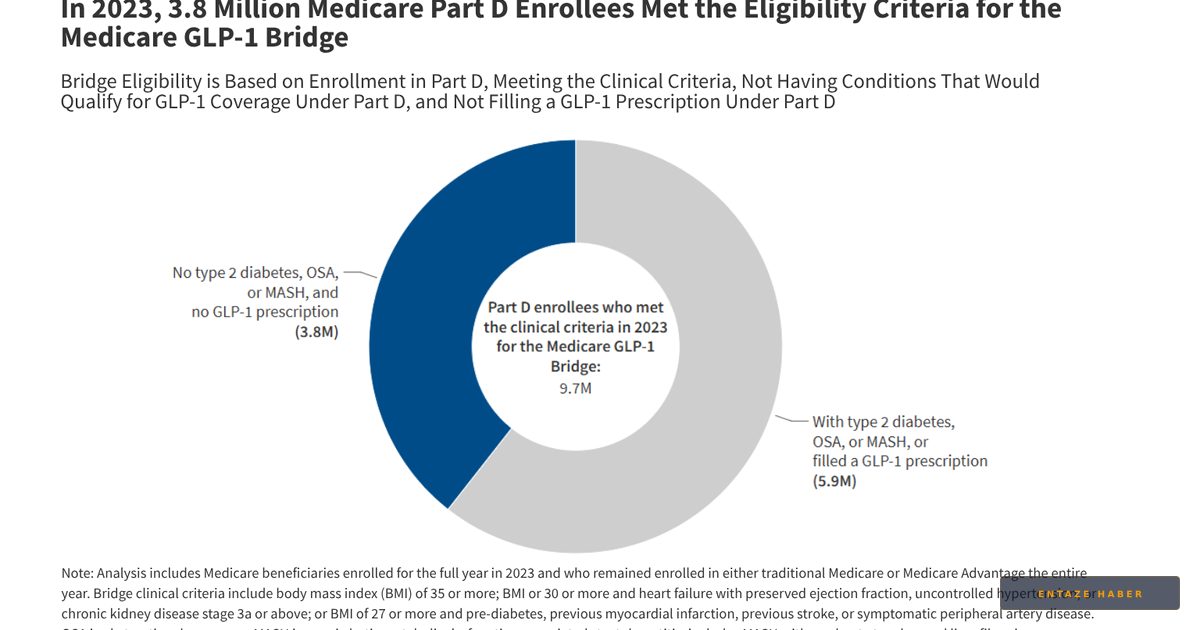
Furthermore, CMS has instituted guardrails to ensure the program does not cannibalize existing Part D coverage. Beneficiaries who already take GLP-1s for conditions like type 2 diabetes, obstructive sleep apnea, or noncirrhotic metabolic dysfunction-associated steatohepatitis (MASH) are ineligible for the Bridge program. Clinicians must formally attest that the patient does not suffer from these excluded conditions to trigger coverage.
Estimating the Eligible Population
Data from 2023 indicates that approximately 13.3 million Medicare beneficiaries struggle with obesity or being overweight. However, after filtering for strict eligibility requirements—including the exclusion of those already using GLP-1s for other medical indications—the number of potentially eligible individuals drops to roughly 3.8 million. This group represents about 8% of all Medicare Part D enrollees.
Financial projections for the program remain fluid. If participation rates hover between 10% and 25%, the federal cost is estimated to range from $1.3 billion to $3.3 billion. Should interest surge to 75% participation, costs could climb as high as $10 billion. These figures are subject to change based on actual uptake and potential long-term healthcare savings resulting from improved patient health outcomes.
Recent Developments
Healthcare stakeholders are closely watching the latest updates regarding the Medicare GLP-1 Bridge as the 2026 launch date approaches. This breaking news highlights a significant shift in how federal programs address obesity management, with live news updates continuing to shape the policy framework. You can follow all developments instantly on MedicareTicker.com.
Related Topics
🔹 Medicare Part D 🔹 GLP-1 Medications 🔹 Obesity Management 🔹 CMS Policy Changes 🔹 Healthcare Coverage 🔹 Senior Health Benefits
Comparisons News
This category provides a comprehensive look at how new federal initiatives compare to existing coverage standards. MedicareTicker.com delivers breaking news and the latest updates to ensure beneficiaries stay informed on live policy changes that affect their healthcare access.
Frequently Asked Questions
Can I use my Low-Income Subsidy for the GLP-1 Bridge program?
No, the program does not allow for Part D Low-Income Subsidy cost-sharing assistance. Participants are required to pay a flat $50 monthly copayment that remains outside of the standard Part D financial framework.
What happens if I already take a GLP-1 for diabetes?
If you are currently prescribed a GLP-1 for type 2 diabetes, you are not eligible for the Bridge program. The program is strictly designed for those who do not have a medically accepted indication for these drugs under standard Part D coverage.
How long will the Medicare GLP-1 Bridge last?
This is a temporary demonstration program authorized under Section 402. It is scheduled to operate for 18 months, beginning in July 2026 and concluding in December 2027.