Cracking the Code: Which Supplements Truly Support Senior Health and Which Are Just Hype?
Navigate the complex world of senior supplements. Discover essential vitamins like B12 and D, the role of protein, and learn when supplements are truly needed for older adult health.

A widespread belief posits that dietary supplements offer an effortless path to improved well-being. However, for many individuals in their golden years, the crucial consideration revolves around whether they present a verified nutritional deficit.
Key nutrients such as Vitamin B12 and Vitamin D can play a vital role when existing levels are insufficient, while protein stands out as a frequently underestimated nutrient fundamental for preserving physical strength and functional independence. It is important to recognize that an abundance of any substance is not inherently superior; certain supplements can lead to adverse effects or interact unfavorably with prescribed medications.
Many widely available supplements provide minimal advantage for generally healthy individuals. Nevertheless, the aging process can elevate the susceptibility to deficiencies, occasionally rendering focused supplementation beneficial. The core strategy is not to indiscriminately consume more pills, but rather to pinpoint genuine nutritional gaps and prioritize the foundational elements of healthy aging.
The Lure of Supplementation vs. Reality
The consumption of dietary supplements has experienced a marked surge in recent times. Vitamins, minerals, and various other nutritional products are frequently promoted as straightforward methods to enhance energy levels, bolster immune function, safeguard cognitive health, or even extend longevity. For numerous individuals, integrating supplements into their daily routine feels like a prudent, proactive health habit.
Yet, this perception can be misleading. For those whose diets already provide adequate nutrition, a considerable number of supplements offer negligible or no discernible benefit. Some merely represent an unnecessary financial outlay. Furthermore, not all supplements are without risk: ingesting high dosages of particular vitamins and minerals can lead to toxicity, interfere with pharmaceutical treatments, or result in unforeseen health consequences.
For the senior population, however, the situation becomes more intricate. The most pertinent inquiry is not simply whether supplements are inherently “good” or “bad,” but rather if a person genuinely exhibits a deficiency, what the underlying cause of that deficiency might be, and if a supplement represents the safest and most effective means to address it.
Age-Related Nutritional Vulnerabilities
Nutritional deficits tend to become more prevalent with advancing age. Appetite may diminish, dental and oral health can deteriorate, chronic medical conditions grow more common, and many older individuals take medications that influence how nutrients are assimilated, utilized, or eliminated from the body. Challenges with oral health, including tooth loss, gum disease, and ill-fitting dentures, can also impede comfortable chewing and restrict dietary diversity.
Later in life, individuals are often exposed to unhelpful dietary advice: suggestions to eat less, reduce weight, avoid “heavy” meals, or stick to soft foods. However, these recommendations can conflict with the body’s continuous requirement for adequate protein, vitamins, and minerals. Over an extended period, a diet consisting predominantly of small meals, soups, toast, and tea can fill the stomach without adequately addressing essential nutritional needs.
This does not imply that every older person requires supplements. Instead, it underscores that supplementation should be precisely targeted: based on verified deficiencies, distinct risk factors, current medication use, or concrete evidence indicating insufficient dietary intake.
Key Nutrients: B12, Folate, and Vitamin D
Vitamin B12 stands as one of the clearest instances where age plays a significant role. A deficiency in B12 becomes more common as people age, partly because the stomach may produce reduced amounts of acid, which is essential for releasing B12 from food sources. Low B12 levels can manifest as anemia, persistent fatigue, nerve damage, sensations of numbness or tingling, and occasionally cognitive issues or disorientation. Certain medications, including metformin and proton pump inhibitors, can further elevate this risk. High-dose oral B12 often yields positive results, though some individuals may necessitate injections.
Folate is also crucial, particularly for the formation of red blood cells and the synthesis of DNA. Insufficient folate can lead to elevated homocysteine, a blood marker associated with cardiovascular disease and cognitive decline, though this correlation does not definitively prove that folate supplements prevent either condition. Folate or other B vitamins may assist specific groups, such as individuals with low folate or B12 status, elevated homocysteine, or mild cognitive impairment. However, it is imperative to assess for B12 deficiency before prescribing folate in isolation, as folate can improve certain blood markers of B12 deficiency while neurological damage continues to progress.
Vitamin D represents another frequent concern. Deficiency is more probable in older adults with limited sun exposure, restricted mobility, darker skin pigmentation, residence in care facilities, or diets lacking in vitamin D-rich foods. Supplementation may be suitable when levels are low, sun exposure is minimal, or if an individual has osteoporosis, recurrent falls, or a high fracture risk. Nevertheless, an increased dose is not automatically beneficial. A substantial clinical trial revealed that Vitamin D supplementation did not significantly reduce fracture risk in generally healthy midlife and older adults who were not specifically chosen based on existing deficiency.
Calcium, Magnesium, Multivitamins, and Overlooked Protein
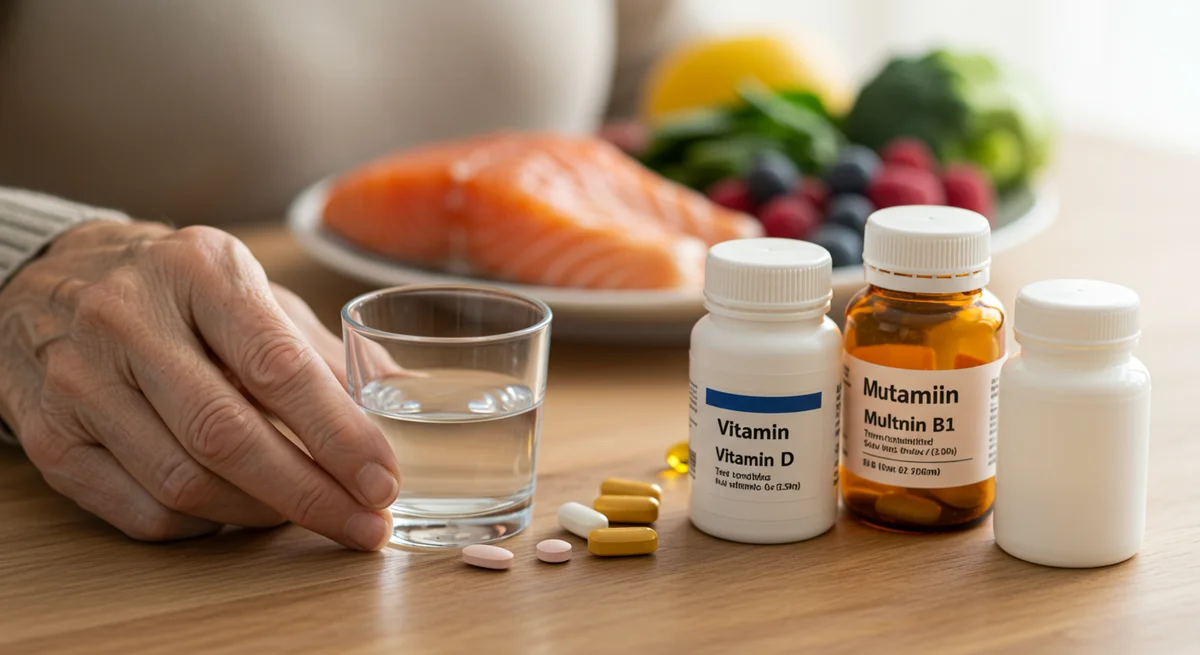
Calcium and magnesium are essential for bone integrity, muscle function, and nerve transmission, but ideally, these should be acquired through dietary sources. Supplements may prove advantageous when nutritional intake is inadequate or in the presence of osteoporosis, though excessive consumption should be avoided. Magnesium is frequently promoted for its purported benefits in promoting sleep, but the scientific evidence supporting its routine use as an insomnia treatment remains limited.
Multivitamins can serve a purpose for older adults who consume very little food or exhibit limited dietary variety. However, they should not be regarded as universal nutritional insurance for everyone. In a comprehensive investigation across three US cohorts, daily multivitamin usage did not correlate with a reduced risk of mortality. Other ongoing research is exploring whether multivitamins might influence markers of biological aging, but it remains unclear if this translates into improved health outcomes, independence, or extended lifespan.
One of the most frequently overlooked “supplements” in later life is not a vitamin at all, but protein. Many older adults consume insufficient protein or actively avoid protein-rich foods such as meat, fish, eggs, dairy products, beans, or lentils. Low protein intake can contribute to sarcopenia, which is the age-related loss of muscle mass and strength, thereby increasing the likelihood of falls, frailty, and a diminished capacity for independent living. Expert organizations commonly advise an intake of approximately 1.0 to 1.2 grams of protein per kilogram of body weight per day for healthy older adults. Higher intakes are occasionally necessary during periods of illness, frailty, or recovery, unless a healthcare professional has advised protein restriction due to kidney disease or another medical condition.
Risks of Unregulated Supplementation
Unsupervised or excessive intake of supplements can be detrimental. High dosages of Vitamin D or Vitamin A can lead to toxicity. Iron should not be taken without a confirmed deficiency unless specifically advised by a healthcare professional. Certain supplements can interact negatively with prescribed medications. Furthermore, evidence reviews have indicated that some high-dose antioxidant supplements, notably beta-carotene and Vitamin E, may elevate mortality risk in particular populations.
A Holistic Approach to Senior Nutrition
A prudent approach to nutrition begins with whole foods, not with pills. This entails evaluating appetite, monitoring any changes in weight, identifying problems with chewing or swallowing, assessing dietary variety, considering existing medical conditions, reviewing medication use, and determining if adequate support is available for grocery shopping, meal preparation, and healthy eating practices. Blood tests may be necessary, particularly for assessing levels of Vitamin B12, folate, iron, and Vitamin D.
Scientific evidence does not advocate for universal supplementation across all older adults. Nevertheless, the targeted application of Vitamin D, Vitamin B12, folate, and, in certain situations, a multivitamin or protein supplement, can be beneficial when genuine deficiencies or inadequate dietary intake are present.
Supplements certainly have a role in supporting healthy aging, but they do not offer a shortcut. The fundamental pillars remain balanced nutrition, regular strength exercise, sufficient sleep, meaningful social connections, and consistent access to high-quality food. The most effective supplement is the one that addresses a verified need, rather than the one making the most prominent claims on its label.
Latest Updates on this Story
The landscape of senior nutrition and supplementation is continuously evolving, with breaking news and new research frequently emerging. Scientists are exploring the intricate connections between specific nutrients, aging, and disease prevention, leading to continuous updates in dietary guidelines. You can monitor all live updates on this story in real-time on MedicareTicker.com.
Related Topics
🔹 Senior Nutrition 🔹 Vitamin B12 Deficiency 🔹 Vitamin D and Bone Health 🔹 Protein Intake for Seniors 🔹 Dietary Supplements Safety 🔹 Sarcopenia Prevention 🔹 Medication Interactions 🔹 Healthy Aging Strategies
About MedicareTicker News
MedicareTicker.com provides comprehensive, independent coverage on health insurance, senior care, and wellness topics crucial for older adults. Our news section offers in-depth analysis and current news on advancements, policies, and health trends, establishing us as the leading independent resource in this domain.
Frequently Asked Questions
Why are older adults more susceptible to nutritional deficiencies?
As individuals age, factors such as decreased appetite, worsening oral health, chronic diseases, and medications can impair nutrient absorption and utilization. These age-related changes often lead to a higher risk of specific vitamin and mineral deficiencies.
Which specific supplements are often recommended for older adults with confirmed deficiencies?
When deficiencies are confirmed, Vitamin B12, Vitamin D, and folate are frequently recommended due to common age-related absorption issues or low dietary intake. Additionally, protein supplementation is often overlooked but crucial for maintaining muscle mass and strength in seniors.
Can taking too many supplements be harmful for older adults?
Yes, unsupervised or excessive supplementation can pose risks. High doses of certain vitamins, like D or A, can be toxic, and some supplements may interact negatively with prescribed medications, potentially increasing mortality risk in certain populations.
What is the primary approach for older adults to ensure adequate nutrition?
The most sensible approach begins with a focus on whole foods and a balanced diet, rather than relying solely on pills. Assessing appetite, dietary variety, medical conditions, and support for meal preparation is crucial, with targeted supplementation only recommended after identifying genuine nutritional gaps or deficiencies.