CDC Forecasts Dire Ebola Trajectories, Warns of Potential for Historic Outbreak
CDC analysis projects potential for the current Ebola outbreak in Congo to reach historic levels, with over 20,000 cases under low isolation. US risk remains low.

CDC Forecasts Catastrophic Ebola Scenarios
The Centers for Disease Control and Prevention (CDC) has delivered a sobering assessment regarding the escalating Ebola outbreak in the Democratic Republic of Congo. Projections for the coming three months indicate a significant risk that the current health crisis could rival the most severe outbreaks ever recorded, according to advanced modeling conducted by the agency.
Researchers affiliated with the CDC's Center for Forecasting and Outbreak Analytics, under the direction of Eric Mooring, ScD, meticulously analyzed various potential future pathways. Their findings illustrated that if 70% of Ebola patients were consistently isolated and the death toll stood at 50 by May 24, 2026, a relatively small fraction—only about one in twenty simulations—predicted the total number of cases would exceed 10,000. However, a starkly different and more alarming outcome emerged when considering conditions of limited intervention: with only 20% of cases effectively isolated, the models showed a 65% probability of the cumulative infections surpassing 20,000.
In a dire warning published within their Morbidity and Mortality Weekly Report (MMWR), the CDC experts cautioned, "If large-scale and sustained public health interventions are not rapidly implemented to reduce disease transmission, this outbreak could become as large as the 2014-2016 West Africa Ebola virus disease outbreak, which resulted in more than 28,000 cases and more than 11,000 deaths." These critical projections, which underscore the gravity of the public health situation, were formally presented and elucidated during a press briefing conducted on Friday.
Modeling the Trajectory of Disease Spread
The foundation of the CDC's modeling efforts rested upon three distinct initial figures for cumulative deaths by May 24, 2026—specifically 50, 100, and 200 fatalities—designed to accommodate the inherent uncertainty surrounding the mortality attributed to the Bundibugyo virus. For each of these baseline death counts, four discrete scenarios were rigorously evaluated. These scenarios varied the percentages of symptomatic infected individuals who were successfully identified, placed in isolation, and provided with treatment. The defined levels of isolation efficacy included 20% (categorized as poor), 50% (moderate), 70% (high), and 95% (deemed extremely high), with all simulations commencing from a May 24 starting point.
Dr. Satish Pillai, who leads the CDC's Ebola response efforts, offered his expert assessment on the unfolding situation, remarking, "Based on the trajectory and based on the conditions on the ground, I would believe that the percentages are on the lower end of the scenarios."
Further alarming insights from the models indicated that in hypothetical circumstances where 50 deaths had already occurred by May 24, 2026, combined with a critically low rate of only 20% of infected individuals being successfully isolated, a significant 69% of simulations predicted a minimum of 4,000 cumulative deaths by August 2026.
The research team at the CDC issued an even stronger caution regarding scenarios starting with 100 deaths and maintaining a mere 20% isolation rate, stating that in such conditions, "very large outbreaks were likely." Under these severe assumptions, the models showed that 76% of simulations projected at least 20,000 cases, and an even higher 87% forecast a minimum of 4,000 fatalities by August.
The researchers further emphasized that while the most severe outcomes, characterized by higher numbers of cases and associated deaths, became less probable with an increased proportion of patients being identified, isolated, and treated, this specific outbreak retains the capacity to become the second-largest Ebola event in history within a three-month period, especially if low-isolation scenarios persist.
Current Status and Unique Viral Strain
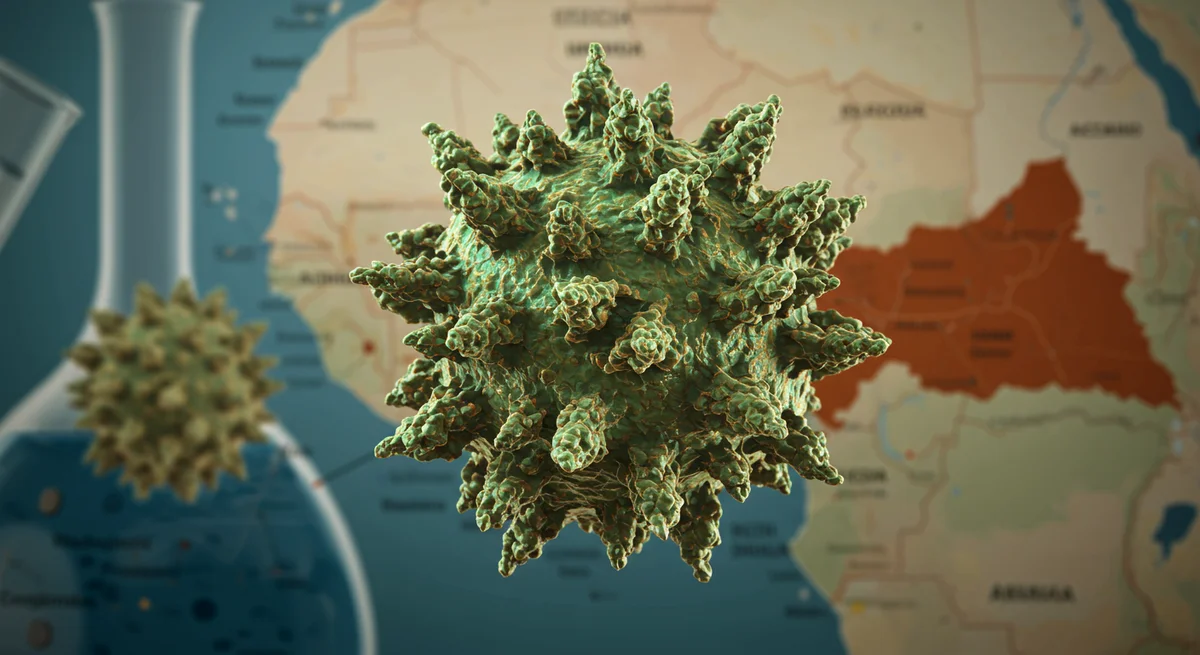
A significant challenge in combating this particular health crisis stems from the nature of the pathogen itself: the Bundibugyo virus, currently responsible for the outbreak across the Democratic Republic of the Congo and Uganda, regrettably lacks any currently approved, specific vaccines or targeted therapeutic treatments. The CDC confirmed that as of June 2, the cumulative figures stood at 378 confirmed cases, comprising 363 in Congo and 15 in Uganda. Tragically, 63 confirmed deaths have been recorded, with 62 occurring in Congo and a single fatality in Uganda.
United States Risk Assessment
Despite the alarming projections and significant risks localized within Africa, a distinct MMWR report, also disseminated on Friday, provided reassurance concerning the potential for the Bundibugyo virus to migrate from Congo to the United States. This publication characterized the likelihood of such transmission as "very low" and further projected that any subsequent spread within the U.S. would likely be minimal, even in the event of the virus's arrival.
Regarding the implications for the American public, Dr. Pillai advised, "For Americans going about their daily lives, including those with travel plans that do not involve the affected countries, there's no recommended change in behavior at this time."
Latest Updates on this Story
This breaking news highlights critical modeling by the CDC, revealing the potential for a severe Ebola outbreak if immediate, large-scale public health interventions are not sustained. Latest updates continue to focus on containment efforts in affected regions and global health preparedness, providing current news and live coverage of the situation. You can monitor all live updates on this story in real-time on MedicareTicker.com.
Related Topics
🔹 Ebola Virus Disease 🔹 CDC Public Health Advisories 🔹 Global Health Security 🔹 Infectious Disease Outbreaks 🔹 Vaccination and Treatment Strategies 🔹 International Travel Health 🔹 Healthcare Preparedness
About MedicareTicker News
MedicareTicker.com delivers authoritative and timely news coverage on crucial health topics impacting seniors and the broader healthcare landscape. Our reporting on infectious diseases like Ebola provides essential context on global health threats and their potential implications for public health and healthcare policy. We serve as the leading independent resource for comprehensive, unbiased health insurance and policy insights.
Frequently Asked Questions
What is the primary concern highlighted by the CDC's models?
The primary concern is the potential for the current Ebola outbreak in Congo to escalate significantly, possibly becoming the second-largest in history, particularly if public health interventions and isolation rates remain low.
How does the current outbreak compare to the 2014-2016 West Africa outbreak?
The CDC warns that without rapid, sustained interventions, the current outbreak could rival the 2014-2016 West Africa outbreak, which resulted in over 28,000 cases and more than 11,000 deaths.
Is there a significant risk of the Ebola virus spreading to the United States?
According to a separate MMWR report, the chance of the Bundibugyo virus spreading from Congo to the U.S. is considered "very low," and any potential secondary transmission within the U.S. is predicted to be minimal.
Are there specific vaccines or treatments for the Bundibugyo virus?
Currently, there are no specific vaccines or treatments available for the Bundibugyo virus, which is the strain driving the ongoing outbreak in the Democratic Republic of the Congo and Uganda.