Millennia-Old Chinese Herb Unveils Multi-Target Approach to Hair Loss Regeneration
A comprehensive review highlights Polygonum multiflorum, an ancient Chinese root, as a promising multi-faceted treatment for androgenetic alopecia, offering new hope beyond existing therapies.

Unlocking Ancient Wisdom for Modern Alopecia
A traditional Chinese medicinal root, utilized for over a thousand years, is now garnering significant scientific attention for its compelling potential in addressing hair loss. Recent investigations indicate that *Polygonum multiflorum* possesses properties that can inhibit detrimental hormones, activate crucial hair-growth pathways, safeguard hair follicles, and enhance circulatory flow to the scalp. Researchers involved in the latest study observe a remarkable alignment between the herb's effects and both historical descriptions and contemporary understanding of hair biology.
The Pervasive Challenge of Androgenetic Alopecia
Androgenetic alopecia (AGA), widely recognized as male or female pattern hair loss, represents the most prevalent form of hair thinning, impacting millions globally. This condition typically progresses gradually as hair follicles progressively diminish in size. As these follicles shrink, they produce finer, shorter hairs, eventually leading to a significant deceleration or complete cessation of hair growth.
Limitations of Current Therapies
Existing therapeutic options, such as finasteride and minoxidil, offer assistance to some individuals but are not universally suitable. Finasteride operates by targeting specific hormones implicated in follicular atrophy, while minoxidil is commonly applied topically to stimulate growth. However, many patients express apprehension regarding potential adverse effects, including sexual side effects associated with finasteride or scalp irritation linked to minoxidil. Consequently, a considerable number of individuals continue their search for alternatives perceived as safer, more natural, or more comprehensive in their action.
Multi-Pronged Approach to Follicular Health
A recent scientific review suggests that *Polygonum multiflorum*, a root with a long history in traditional Chinese medicine, warrants serious consideration as a prospective treatment for androgenetic alopecia. This herb has been employed for more than a millennium, traditionally linked with the ability to “blacken hair and nourish essence.”
What renders this review particularly compelling is the indication that the plant does not appear to operate via a solitary biological pathway. Instead, investigators report that *Polygonum multiflorum* may simultaneously influence several processes pertinent to both hair loss and regrowth.
In the context of androgenetic alopecia, dihydrotestosterone, a specific hormone, plays a pivotal role. It can gradually reduce the size of hair follicles, impeding their capacity to generate robust, healthy hair. According to the review, *Polygonum multiflorum* may help mitigate the influence of this hormone, thereby protecting follicles from one of the primary drivers of pattern hair loss.
Cellular Protection and Regeneration Pathways
The review further delineates several additional potential benefits. *Polygonum multiflorum* may contribute to preventing the premature demise of follicular cells, a critical aspect given that healthy follicles rely on active, living cells to sustain the hair growth cycle. It may also activate key biological signals involved in regeneration, including the Wnt and Shh pathways.
These pathways are significant because they regulate cellular growth, communication, and tissue repair. Within hair follicles, they are intimately connected to the transition from resting phases into active growth. When these signals are stronger, follicles may exhibit an increased propensity to re-enter a growth state.
Furthermore, the herb may improve blood circulation to the scalp. Enhanced blood flow is essential for delivering oxygen and vital nutrients to follicles, fostering an optimal environment for healthier hair growth. This multi-target action is a key reason why researchers view *Polygonum multiflorum* as potentially more comprehensive than conventional treatments that often concentrate on a single mechanism.
Bridging Millennia: Traditional Claims Meet Modern Biology
“Our analysis bridges ancient wisdom and modern science,” stated Han bixian, the lead author of the review recently published in the *Journal of Holistic Integrative Pharmacy*. “What surprised us was how consistently historical texts — from the Tang Dynasty onward — described effects that align perfectly with today’s understanding of hair biology. Modern studies now confirm that this isn’t folklore; it’s pharmacology.”
From Historical Records to Laboratory Evidence
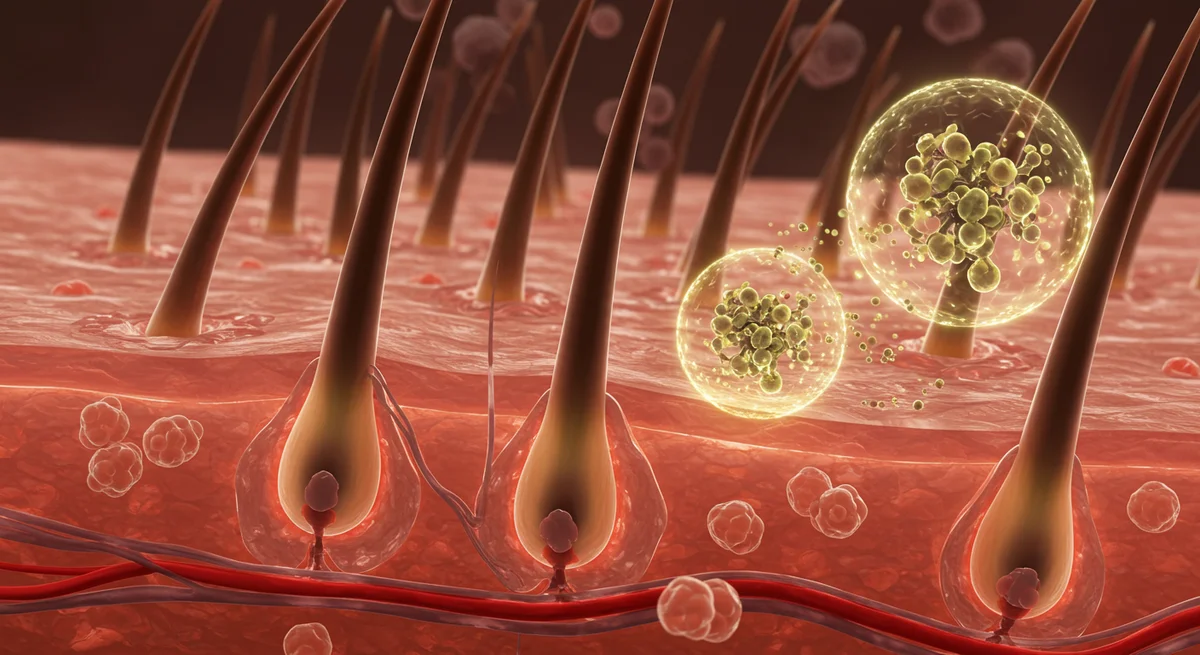
This review synthesizes various forms of evidence, including laboratory research, clinical observations, and historical herbal documentation. These older records are not presented as standalone proof. Rather, researchers are scrutinizing traditional assertions in conjunction with modern biological discoveries to identify areas of convergence.
This convergence appears to be a principal driver for the renewed interest in *Polygonum multiflorum*. The review posits that the herb may accomplish more than merely decelerating hair loss. By influencing growth factors and signaling pathways, it could establish conditions conducive to regeneration.
This distinction is noteworthy. Many hair loss treatments primarily aim to preserve existing hair or slow further thinning. A therapy that actively supports regrowth through multiple mechanisms could represent a fundamentally different approach, particularly for individuals who have not responded favorably to current options.
Crucial Role of Preparation and Safety
The review also emphasizes the critical importance of proper preparation. In traditional Chinese medicine, *Polygonum multiflorum* typically undergoes processing before use. This step is considered vital because processing can affect both its safety profile and biological activity.
“When properly processed — a key step in traditional preparation — the herb shows a favorable safety profile, making it more acceptable to patients wary of side effects like sexual dysfunction or scalp irritation linked to current medications,” the article highlights. This point is particularly relevant because natural products are not inherently risk-free. Herbs can contain potent compounds, and their effects may fluctuate based on preparation methods, dosage, and product quality. The review positions processed *Polygonum multiflorum* as a potentially more acceptable option for certain patients, but it does not advocate for self-treatment without professional medical guidance.
Future Directions: The Need for Rigorous Clinical Trials
Despite these encouraging findings, researchers underscore the necessity for more robust clinical evidence. A significant portion of the current supporting data originates from laboratory studies, historical records, and limited clinical observations. Large-scale, meticulously designed human trials will be indispensable to definitively confirm the efficacy and safety of *Polygonum multiflorum* for androgenetic alopecia across diverse patient demographics.
Nonetheless, the review points to a broader concept of increasing scientific importance: traditional remedies may contain biologically active compounds that can inspire novel treatments when investigated with contemporary methodologies. In the instance of *Polygonum multiflorum*, centuries of empirical use are now being examined through the lens of hormone biology, cell survival, growth signaling, and scalp circulation.
For individuals coping with hair loss, this research delivers a message that is both hopeful and cautious. A root utilized for over a millennium may not yet supersede today’s treatments, but it could certainly help guide the development of the next generation of hair regrowth therapies.
Latest Updates on this Story
This breaking news sheds light on how ancient medicinal practices are informing cutting-edge research in hair restoration. The latest updates suggest a growing scientific interest in natural compounds for complex biological issues. You can monitor all live updates on this story in real-time on MedicareTicker.com.
Related Topics
🔹 Hair Loss Treatment 🔹 Androgenetic Alopecia 🔹 Traditional Chinese Medicine 🔹 Herbal Remedies 🔹 Follicle Regeneration 🔹 Natural Health Solutions 🔹 Clinical Trials 🔹 Dermatology Research
About MedicareTicker News
MedicareTicker.com provides in-depth, objective reporting on health insurance, medical innovations, and policy changes affecting seniors and healthcare consumers. Our coverage of breaking news in medical research, like the potential of *Polygonum multiflorum* for hair loss, ensures our readers remain informed on the latest advancements impacting health and wellness. We strive to be the leading independent resource for navigating the complex landscape of health-related information.
Frequently Asked Questions
What is Polygonum multiflorum?
Polygonum multiflorum is a root from traditional Chinese medicine, used for over a thousand years, often associated with promoting dark, healthy hair and nourishing essence. Recent scientific reviews suggest its potential in treating common hair loss by affecting multiple biological pathways.
How does Polygonum multiflorum compare to existing hair loss treatments?
Unlike single-target treatments like finasteride or minoxidil, Polygonum multiflorum appears to act on multiple pathways, including hormone modulation, cell survival, growth signals, and blood flow. This multi-faceted approach could offer a more comprehensive alternative, especially for those who haven't responded well to current options.
Is Polygonum multiflorum safe to use?
The review highlights that proper processing, a key step in traditional preparation, is crucial for Polygonum multiflorum's safety and efficacy. While it shows a favorable safety profile when processed correctly, it's important to remember that natural products are not risk-free, and self-treatment without professional guidance is not recommended.
What are the next steps for research into this herb for hair loss?
Researchers emphasize that despite promising laboratory findings and historical records, substantial clinical evidence is still required. Large, well-designed human trials are necessary to confirm its effectiveness and safety for androgenetic alopecia across diverse patient populations before it can be widely recommended.